You Feel Colder As You Age: The Science Reason Why
Older people report feeling colder, enough that it is clearly happening, but why has been a mystery. Until now.
Older people report feeling colder, enough that it is clearly happening, but why has been a mystery. Until now.


Juicing up your cell phone or iPod may take on a whole new meaning in the future. Researchers at Saint Louis University in Missouri have developed a fuel cell battery that runs on virtually any sugar source — from soft drinks to tree sap — and has the potential to operate three to four times longer on a single charge than conventional lithium ion batteries, they say.
For consumers, that could mean significantly longer time to talk and play music between charges. The new battery, which is also biodegradable, could eventually replace lithium ion batteries in many portable electronic applications, including computers, the scientists say. Their findings were described today at the 233rd national meeting of the American Chemical Society.

Prostitutes, perversions and public scandals – the stuff of the 21st century tabloids was familiar to readers three centuries earlier, according to new research from the University of Leeds.
The reading of erotic literature was already a social activity 300 years ago.
18th c. corset. Credit: www.museumofcostume.co.uk

Modern man"s earliest known close ancestor was significantly more apelike than previously believed, a New York University College of Dentistry professor has found.
A computer-generated reconstruction by Dr. Timothy Bromage, a paleoanthropologist and Adjunct Professor of Biomaterials and of Basic Science and Craniofacial Biology, shows a 1.9 million-year-old skull belonging to Homo rudolfensis, the earliest member of the human genus, with a surprisingly small brain and distinctly protruding jaw, features commonly associated with more apelike members of the hominid family living as much as three million years ago.
IADR 2007 Conference Poster Dr. Timothy G.
Researchers at the University at Buffalo have described a novel pathway by which estradiol, the primary estrogen in humans, aids in maintaining bone density, a function critical to avoiding osteoporosis.
It is well known that estrogen is essential for healthy bone, and that when the production of estrogen is reduced, as occurs normally in postmenopausal women and pathogenically after exposure to radiation or chemotherapeutic drugs, bones become brittle and break easily. However, the mechanisms involved aren’t clearly understood.
Tissue engineering has emerged as a promising alternative for the reconstitution of lost or damaged organs and tissues, circumventing the complications associated with traditional transplants. Tissue engineers attempt to repair or regenerate damaged tissue by using engineered tissue substitutes that can sustain functionality during regeneration and eventually integrate into the host tissue. The traditional tissue-engineering paradigm combines isolated cells with appropriate bioactive agents in a biomaterial scaffold.
More powerful computers are allowing scientists and engineers to conduct simulations that grow more realistic each year. While companies are using these tools to slash the costs of producing everything from airliners to antibiotics, researchers in Houston are using them to refine their search for the genetic causes of disease.
Factoring in crustal strength changes along the San Andreas Fault would improve the predictive models that researchers use to understand the likelihood and intensity of earthquakes there. That's the conclusion from a study published in the April issue of Geology titled, "Diffuse interseismic deformation across the Pacific-North America plate boundary."
Investigators at St. Jude Children's Research Hospital have mapped out many of the dynamic genetic and biochemical changes that make up a cell's response to a shortage of a molecule called Coenzyme A (CoA), a key player in metabolism. The results provide the most detailed look ever obtained of the complex metabolic changes in a cell triggered by a potentially fatal stress.
Metabolism is the sum of all biochemical reactions involved in maintaining the health of the cell, including breaking down and synthesizing various molecules to produce energy and build substances the cell needs to operate normally. CoA plays key roles in the cell's metabolism by participating in biochemical reactions in specific areas throughout the cell.
Craftsmen tile walls or floors by hand; but how can you get an ordered monolayer onto a substrate when the "tiles" are microscopically small instead of big and easy to handle? Previously, self-assembly processes have been the method of choice for this scale. Korean researchers have now come to the realization that even such tiny components can be arranged in a "do-it-yourself" method. As they describe in the journal Angewandte Chemie, their manually produced monolayers of microcrystals are qualitatively superior to the self-assembled variety.
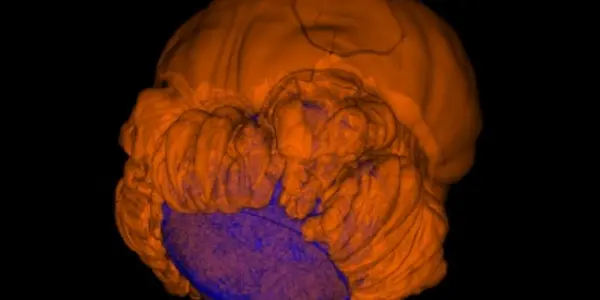
University of Chicago scientists will demonstrate how to incinerate a white dwarf star in unprecedented detail at the “Paths to Exploding Stars” conference on Thursday, March 22, in Santa Barbara, Calif.
White dwarf stars pack one and a half times the mass of the sun into an object the size of Earth. When they burn out, the ensuing explosion produces a type of supernova that astrophysicists believe manufactures most of the iron in the universe.
The theory that Earth once underwent a prolonged time of extreme global freezing has been dealt a blow by new evidence that periods of warmth occurred during this so-called 'Snowball Earth' era.
Analyses of glacial sedimentary rocks in Oman, published online today in Geology, have produced clear evidence of hot-cold cycles in the Cryogenian period, roughly 850-544 million years ago. The UK-Swiss team claims that this evidence undermines hypotheses of an ice age so severe that Earth's oceans completely froze over.
Scientists from the NIOZ Royal Netherlands Institute for Sea Research obtained for the first time a detailed temperature record for tropical central Africa over the past 25,000 years. They did this in cooperation with a German colleague from the University of Bremen, The scientists developed an entirely new method to reconstruct the history of land temperatures based on the molecular fossils of soil bacteria. They applied the method to a marine sediment core taken in the outflow of the Congo River. This core contained eroded land material and microfossils from marine algae. The results show that the land environment of tropical Africa was cooled more than the adjacent Atlantic Ocean during the last ice-age.