Brain Circuit Linked To Pregnancy Food Cravings Identified
Pregnant women have experienced exotic food cravings since recorded history began. This may be why.
Pregnant women have experienced exotic food cravings since recorded history began. This may be why.


Unlike most of our sensory systems that detect only one type of stimuli, our sense of smell works double duty, detecting both chemical and mechanical stimuli to improve how we smell, according to University of Pennsylvania School of Medicine researchers in the March issue of Nature Neuroscience.
This finding, plus the fact that both types of stimuli produce reaction in olfactory nerve cells, which control how our brain perceives what we smell, explains why we sniff to smell something, and why our sense of smell is synchronized with inhaling.

With hundreds of nanotechnology-enabled products already on the market and many more in the commercial pipeline, a new report by a former senior Environmental Protection Agency (EPA) official urges policymakers to give greater attention to the challenges of crafting an oversight system that can effectively address health and safety issues particular to nanoscale materials and devices.
"It is time for government, industry, the scientific community, non-governmental organizations and other interested parties to begin a more systematic discussion about the core elements of an oversight framework for nanoscale materials" writes Mark Greenwood in Thinking Big About Things Small: Creating an Effective Oversight System for Nanotechnology. Greenwood worked for EPA for over 16 years and was director of EPA's Office of Pollution Prevention and Toxics from 1990 to 1994.
Researchers at the University of Illinois have found that adolescence is a time of remodeling in the prefrontal cortex, a brain structure dedicated to higher functions such as planning and social behaviors.
The study of rats found that both males and females lose neurons in the ventral prefrontal cortex between adolescence and adulthood, with females losing about 13 percent more neurons in this brain region than males.
Psychology professor Janice Juraska, right, and graduate student Julie Markham have found that adolescents begin to lose neurons in the prefrontal cortex. Credit: Photo by L. Brian Stauffer

Assigning dates to the events in the life of a rock—for example, a collision with a piece of continent, or a journey through the Earth’s crust—has long challenged geologists, as the events themselves can confound evidence of the past.
But now, armed with a custom-built machine known as the Ultrachron, University of Massachusetts Amherst scientists are refining a technique that allows them to pin dates to geologic processes with unprecedented precision.
Genetically modified crops were supposed to improve efficiency and make life easier for farmers in poor countries. The opposite may be true, according to a Washington University in St. Louis study. Technology may be racing too fast for farmers to keep up. It may even be linked to higher suicide rates.
The arrival of genetically modified crops has added another level of complexity to farming in the developing world, says a sociocultural anthropologist at Washington University in St. Louis.
Glenn D. Stone, Ph.D., professor of anthropology and of environmental studies, both in Arts & Sciences, at Washington University in St. Louis, has completed the first detailed anthropological fieldwork on these crops and the way they impact — and are impacted by — local culture.
UNSW space scientists have outshone NASA by scoring a higher academic paper citation rate, according to the latest international ranking of universities and space science institutions.
The Thomson group recently reported on the output of refereed journal articles and citations in Space Sciences from 2001 to 2005.
UNSW did extremely well with a very high citation rate (15.69) that was better than NASA (15.42) and within 20 percent of Caltech and Harvard – the world’s three top-ranked space science institutions.
UNSW’s citation rate was the second highest amongst Australian universities, just behind ANU’s (16.09).
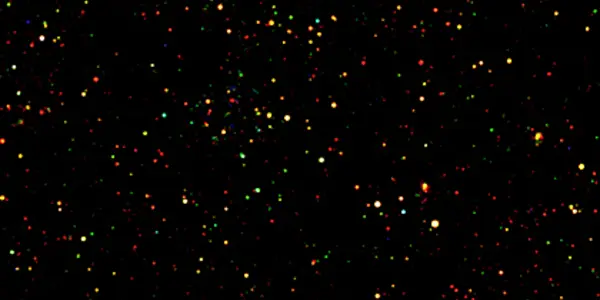
A new wide-field panorama reveals more than a thousand supermassive black holes in the centers of galaxies, some up to several billion times more massive than the sun. This survey, taken in a region of the Bootes constellation, involved 126 separate Chandra exposures of 5,000-seconds each, making it the largest contiguous field ever obtained by the observatory. At 9.3 square degrees, it is over 40 times larger than the full moon seen on the night sky, which is also shown in this graphic for scale.
Smithsonian scientists and colleagues report a new study that may shake up the way paleontologists think about how environmental change shapes life on Earth. The researchers summarized the environmental, ecological and evolutionary consequences for Caribbean shallow-water marine communities when the Isthmus of Panama was formed. They concluded that extinctions resulting when one ocean became two were delayed by 2 million years.
Researchers from the Smithsonian Tropical Research Institute, Scripps Institution of Oceanography and London's Natural History Museum report their study in the Proceedings of the National Academy of Sciences on March 12.
Perceived attractiveness is the result of compatibility of biological sex and gendered cues--masculinity and femininity as specified within the society—according to a study by researchers at New York University and Texas A & M University.
The University of Wisconsin School of Medicine and Public Health is among the first medical centers in the country taking part in a novel clinical trial investigating if a subject's own stem cells can treat a form of severe coronary artery disease.
The trial, just underway at UW Hospital and Clinics, is enrolling subjects in the Autologous Cellular Therapy CD34-Chronic Myocardial Ischemia (ACT34-CMI) Trial. The first patient underwent the procedure March 7. Because the study is randomized and "double-blinded," however, neither the patient nor the research physician knows if he received his own stem cells or a placebo substance.
This trial is the first human Phase II adult stem cell therapy study in the U.S.
Plant and animal diseases can play a major and poorly appreciated role in allowing the invasion of exotic species, which in turn often threatens biodiversity, ecological function and the world economy, researchers say in a new report.
In particular, a plant pathogen appears to have opened the gate for the successful invasion of non-native grasses into much of California, one of the world's largest documented cases of invading species and one that dramatically changed the history and ecology of a vast grassland ecosystem.
Global air network showing hotspots for invasion of foreign species. Credit: University of Oxford.
A new study by Christopher Plowe and colleagues (University of Maryland School of Medicine) on a malaria vaccine used at a testing site in Mali calls into question whether the best vaccine was chosen to be tested at this particular site.
The development of an effective malaria vaccine is not easy, in part because there are different strains of the Plasmodium parasite that causes the disease. The different strains carry different variants (alleles) of the genes encoding parasite components (antigens) used in test vaccines, which means that the parasites causing infection in a given location may differ from the ones used for vaccination. If this is the case, the immune response generated by the vaccine might be less effective or even ineffective.