Brain Circuit Linked To Pregnancy Food Cravings Identified
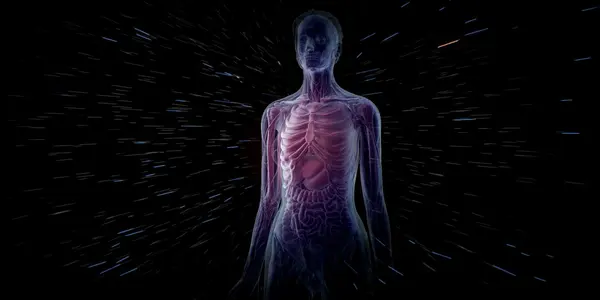
Pregnant women have experienced exotic food cravings since recorded history began. This may be why.
Pregnant women have experienced exotic food cravings since recorded history began. This may be why.


Tiny tremors and temblors recently discovered in fault zones from California to Japan are generated by slow-moving earthquakes that may foreshadow catastrophic seismic events, according to scientists at Stanford University and the University of Tokyo.
In a study published in the March 15 issue of the journal Nature, the research team focused on weak seismic signals known as "non-volcanic tremor" and "low-frequency earthquakes," which seismologists say may be useful in forecasting the likelihood of potentially destructive mega-quakes of magnitude 8 or higher.
"Non-volcanic tremor is a weak shaking of the Earth that was discovered about five years ago in Japan," said Gregory C. Beroza, professor of geophysics at Stanford and co-author of the Nature study.

Instruments on NASA's Cassini spacecraft, part of the joint NASA/ESA/ASI Cassini-Huygens mission to Saturn and its moons, have found evidence for seas, likely filled with liquid methane or ethane, in the high northern latitudes of Saturn's moon Titan.
One such feature is larger than any of the Great Lakes of North America and is about the same size as several seas on Earth.
This image of Saturn’s largest moon, Titan, obtained by Cassini's radar instrument during a near-polar flyby on 22 February 2007, features dunes and lakes, one of which is larger than any lake on Earth and could be legitimately called a sea. Titan’s lakes are thought to consist of liquid methane and ethane.
The problem of efficiently delivering drugs, especially those that are hydrophobic or water-repellant, to tumors or other disease sites has long challenged scientists to develop innovative delivery systems that keep these drugs intact until reaching their targets.
Now scientists in the University at Buffalo’s Institute for Lasers, Photonics and Biophotonics and Roswell Park Cancer Institute have developed an innovative solution in which the delivery system is the drug itself.
Purdue University chemical engineers have proposed a new environmentally friendly process for producing liquid fuels from plant matter - or biomass - potentially available from agricultural and forest waste, providing all of the fuel needed for "the entire U.S. transportation sector."
The new approach modifies conventional methods for producing liquid fuels from biomass by adding hydrogen from a "carbon-free" energy source, such as solar or nuclear power, during a step called gasification. Adding hydrogen during this step suppresses the formation of carbon dioxide and increases the efficiency of the process, making it possible to produce three times the volume of biofuels from the same quantity of biomass, said Rakesh Agrawal, Purdue's Winthrop E.
A team of UBC researchers has re-classified an ancient line of aquatic plants previously thought to be related to grasses and rushes. The discovery clarifies what may be one of the biggest misunderstandings in botanical history.
"It’s a classic case of mistaken identity," says Sean Graham, an associate professor and researcher with the UBC Botanical Garden and Centre for Plant Research in the Faculty of Land and Food Systems.
A team from Centre de recherche Université Laval Robert-Giffard (CRULRG) has made significant progress toward finding a way to determine whether a child is likely to one day suffer from bipolar disorder or schizophrenia. The findings of the research team supervised by Dr. Michel Maziade, director of CRULRG, professor in Université Laval’s Faculty of Medicine, and Canada Research Chair in the Genetics of Neuropsychiatric Disorders, will be presented at the International Congress on Schizophrenia Research on March 31 in Colorado Springs.
Schizophrenia and bipolar disorder are problems that emerge early on in life, but that are usually not diagnosed before the age of 20 or 25. The participants in Dr.
Obese men who are diagnosed with prostate cancer have more than two-and-a-half times the risk of dying from the disease as compared to men of normal weight at the time of diagnosis, according to a study by researchers at Fred Hutchinson Cancer Research Center. The findings by senior author Alan Kristal, Dr.P.H., and colleagues appear online and will be published in the March 15 print edition of the journal Cancer.
“I was very surprised by the findings,” said Kristal, member and associate head of the Cancer Prevention Program in the Hutchinson Center’s Public Health Sciences Division. “We found the prostate-cancer-specific mortality risk associated with obesity was similar regardless of treatment, disease grade or disease stage at the time of diagnosis,” he said.
Inflammatory bowel diseases, such as Crohn’s disease and Ulcerative Colitis, severely impair the lives of more than four million people worldwide. The development of effective therapies against these diseases requires an understanding of their underlying molecular mechanisms. Researchers from the Universities of Cologne and Mainz in Germany, the Mouse Biology Unit of the European Molecular Biology Laboratory (EMBL) in Italy and their collaborators, have now deciphered a molecular signal that triggers chronic intestinal inflammation.
More than three-quarters of the particulate pollution known as black carbon transported at high altitudes over the West Coast during spring is from Asian sources, according to a research team led by Professor V. Ramanathan at Scripps Institution of Oceanography, UC San Diego.
Though the transported black carbon, most of which is soot, is an extremely small component of air pollution at land surface levels, the phenomenon has a significant heating effect on the atmosphere at altitudes above two kilometers (6,562 feet).
As the soot heats the atmosphere, however, it also dims the surface of the ocean by absorbing solar radiation, said Ramanathan, a climate scientist at Scripps, and Odelle Hadley, a graduate student at the Center for Atmospheric Sciences at Scripps.
Despite advances in experimental nuclear physics, the most detailed probing of atomic nuclei still requires heavy doses of advanced nuclear theory. The problem is that using theory to make meaningful predictions requires massive datasets that tax even high-powered supercomputers.
In a March 16 Physical Review Letters article, researchers from Michigan State and Central Michigan universities report dramatic success in stripping away much of this stubborn complexity. The advance, which slashes computational time from days or weeks to minutes or hours, may help address one of the most important questions in nuclear physics today: what is the structure of heavy atomic nuclei?
Certain children who wear a special kind of no-line bifocal lenses show signs of slower progression of myopia than those who wear more conventional lenses according to a new study published in Investigative Ophthalmology & Visual Science (IOVS).
The study found that among children with two myopic parents, myopia progression was slower in children wearing progressive-addition lenses (PALs) when compared to those wearing single-vision lenses (SVLs). Knowing parental myopia may be helpful when deciding which myopic children are likely to benefit from special lenses.
Research by the World Health Organization (WHO) has suggested that the course and symptomatic expression of schizophrenia is relatively more benign in developing societies. However, a new study from Current Anthropology challenges this assumption, comparing biological and cultural indicators of schizophrenia in urban, Western societies with study data from the island of Palau, which has one of the highest rates of schizophrenia diagnosis in the world today.
“A 1% average worldwide population prevalence of schizophrenia is routinely interpreted in the medical literature as implying a uniform distribution,” write Roger J. Sullivan (California State University, Sacramento), John S. Allen (University of Southern California), and Karen L. Nero (University of Canterbury, New Zealand).