Brain Circuit Linked To Pregnancy Food Cravings Identified
Pregnant women have experienced exotic food cravings since recorded history began. This may be why.
Pregnant women have experienced exotic food cravings since recorded history began. This may be why.


"Build a better mousetrap," the saying goes, "and the world will beat a path to your door." In the complex field of organic chemistry, that path leads to Florida State University, where a newly developed substance could make the jobs of scientists throughout the world a little easier as they work to develop new drugs and other chemicals that benefit humanity.
Researchers from the Dudley Laboratory at FSU have invented a reagent — a substance used in a chemical reaction to detect, measure, examine or produce other substances — that can trap specific regions of complex molecules in such a way that those molecules can be released at a later time.
New research from the University of North Carolina at Chapel Hill School of Medicine has identified two proteins that may help protect against skin cancer.
The study, which appears in the advance online edition of the journal Molecular and Cellular Biology, indicates that two proteins, named Timeless and Tipin, form a complex that regulates the rate at which DNA is replicated after exposure to ultraviolet radiation.
Ultraviolet radiation in sunlight damages the DNA in skin cells. If left unrepaired by the cell, this damage can turn into mutations that lead to cancer. Before cells divide, they must replicate, or copy, their DNA to form new daughter cells.
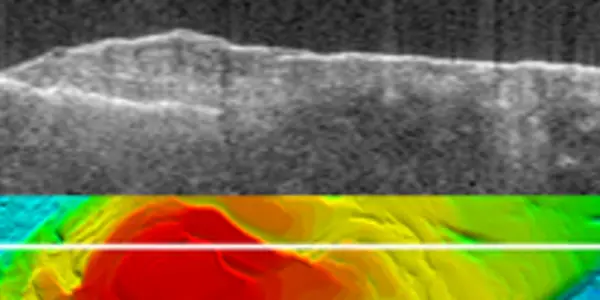
This new estimate comes from mapping the thickness of the dusty ice by the Mars Express radar instrument that has made more than 300 virtual slices through layered deposits covering the pole. The radar sees through icy layers to the lower boundary, which in places is as deep as 3.7 kilometres below the surface.
"The south polar layered deposits of Mars cover an area as wide as a big portion of Europe. The amount of water they contain has been estimated before, but never with the level of confidence this radar makes possible," said Dr. Jeffrey Plaut of NASA's Jet Propulsion Laboratory, Pasadena (California), co-Principal Investigator for the radar and lead author of the study.
A new NASA study has found that an important counter-balance to the warming of our planet by greenhouse gases – sunlight blocked by dust, pollution and other aerosol particles – appears to have lost ground.
The thinning of Earth’s "sunscreen" of aerosols since the early 1990s could have given an extra push to the rise in global surface temperatures. The finding, published today in the journal Science, may lead to an improved understanding of recent climate change. In a related study published last week, scientists found that the opposing forces of global warming and the cooling from aerosol-induced "global dimming" can occur at the same time.
Researchers at the University of California, Santa Cruz, have determined the three-dimensional structure of an RNA enzyme, or "ribozyme," that carries out a fundamental reaction required to make new RNA molecules. Their results provide insight into what may have been the first self-replicating molecule to arise billions of years ago on the evolutionary path toward the emergence of life.
In all forms of life known today, the synthesis of DNA and RNA molecules is carried out by enzymes made of proteins. The instructions for making those proteins are contained in genes made of DNA or RNA (nucleic acids). The circularity of this process poses a challenge for theories about the origins of life.
"Which came first, nucleic acids or proteins?
The entire debate about global warming is a mirage. The concept of ‘global temperature’ is thermodynamically as well as mathematically an impossibility, says professor at The Niels Bohr Institute, University of Copenhagen, Bjarne Andresen who has analyzed this hot topic in collaboration with professors Christopher Essex from University of Western Ontario and Ross McKitrick from University of Guelph, both Ontario, Canada.
It is generally assumed that the atmosphere and the oceans have grown warmer during the recent 50 years. The reason for this point of view is an upward trend in the curve of measurements of the so-called ‘global temperature’.

Researchers at the University of Pennsylvania School of Medicine are harnessing two new, non-invasive techniques to look more closely inside the working lungs - leading to early detection of diseases, like emphysema, before it becomes evident in other modes of imaging.
"Up until now, imaging the way lungs function in real time has been limited by conventional methods which result in rather low resolution images," comments Warren Gefter, MD, Chief of Thoracic Imaging in the Radiology Department at Penn.
An international team of American and Chinese paleontologists has discovered a new species of mammal that lived 125 million years ago during the Mesozoic Era, in what is now the Hebei Province in China. The new mammal, documented in the March 15 issue of Nature, provides first-hand evidence of early evolution of the mammalian middle ear--one of the most important features for all modern mammals.
Named Yanoconodon allini after the Yan Mountains in Hebei, the fossil was unearthed in the fossil-rich beds of the Yixian Formation and is the first Mesozoic mammal recovered from Hebei. The fossil site is about 300 kilometers outside of Beijing.
Does God or some other type of transcendent entity answer prayer?
The answer, according to a new Arizona State University study published in the March journal Research on Social Work Practice, is “yes.” David R. Hodge, an assistant professor of social work in the College of Human Services at Arizona State University, conducted a comprehensive analysis of 17 major studies on the effects of intercessory prayer – or prayer that is offered for the benefit of another person – among people with psychological or medical problems. He found a positive effect.
“There have been a number of studies on intercessory prayer, or prayer offered for the benefit of another person,” said Hodge, a leading expert on spirituality and religion. “Some have found positive results for prayer.
In order to differentiate and specialize, stem cells require very specific environmental cues in a very specific order, and scientists have so far been unable to prod them to go through each of the necessary steps. But now, for the first time, a study in mice by Rockefeller University scientists shows that embryonic stem cells implanted in the brain appear to develop into fully differentiated granule neurons, the most plentiful neuron in the cerebellum. The findings were reported Feb.
Instruments known as solid-state telescopes (SSTs), built with detectors fabricated at Lawrence Berkeley National Laboratory and carried aboard the recently launched THEMIS mission, have delivered their first data on how charged particles in the solar wind interact with Earth's magnetic field to shape the planet's magnetosphere.
THEMIS's principal investigator is Vassilis Angelopoulos of the University of California at Berkeley's Space Sciences Laboratory (SSL), which is leading the mission for NASA and which designed and built the instruments in collaboration with agencies in Germany, France, and Austria.
One of the five THEMIS spacecraft prior to launch.
The Internet is enough of a marvel that most people would never ask, "Is this really how we would build it if we could design it all today?" But asking that very question is the job of a broad-based team of Stanford researchers. Taking a nothing-is-sacred approach to better meet human communications needs, this month they are launching a new program called the Clean Slate Design for the Internet. They will present their ideas March 21 during a daylong workshop at the annual meeting of the Stanford Computer Forum.
"How should the Internet look in 15 years?" asks Nick McKeown, an associate professor of electrical engineering and computer science who is leading the effort.