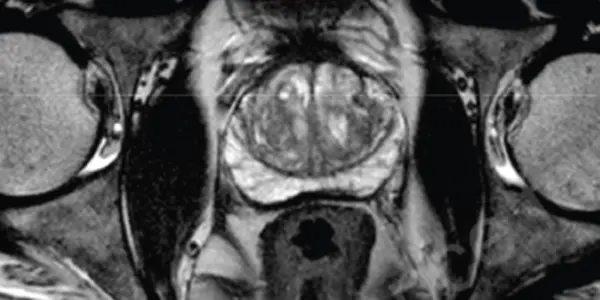
Brain Circuit Linked To Pregnancy Food Cravings Identified
Pregnant women have experienced exotic food cravings since recorded history began. This may be why.
Pregnant women have experienced exotic food cravings since recorded history began. This may be why.


When they fly, insects use their vision for piloting, just like human pilots. The electric signals from their facetted eyes travel through specialized neurons to stimulate the wing muscles, which let the insects correct their flight and avoid crashes. Could these same neurons be used in a sort of "automatic pilot"?
This is what Nicolas Franceschini, Franck Ruffier and Julien Serres have just shown. These biorobotics specialists from the Movement and Perception Laboratory (CNRS/Université de la Méditerranée) in Marseille, France have revealed an automatic mechanism called the "optic flow regulator" that controls the lift force.

A decades-old cancer mystery has been solved by researchers at Cold Spring Harbor Laboratory (CSHL). "We not only found a critical tumor suppressor gene, but have revealed a master switch for a tumor suppressive network that means more targeted and effective cancer therapy in the future," said CSHL Associate Professor Alea Mills, Ph.D. The study, headed by Mills, was published in the February issue of Cell.
Specifically, Mills' discovery identifies CHD5, a protein that prevents cancer, as a novel tumor suppressor, mapping to a specific portion of chromosome 1 known as 1p36. When CHD5 is not doing its job, the machinery within our cells that normally prevents cancer is switched off.

A Michigan scientist who was put on academic trial for teaching evolution at Calvin College in the 1980s is emerging as a national figure in the cultural war over faith and science.
On Wednesday, Dr. Howard Van Till was one of four scholars from across the country who debated faith and evolution at a conference at Grove City College, a Christian liberal arts school near Pittsburgh.
And Sunday, he will lecture at Kirk in the Hills Presbyterian Church in Bloomfield Hills.
"This is such an important issue for Americans," said John Cook, a lawyer from West Bloomfield who plans to attend Van Till's talk.
Insects and other flying animals are somehow able to maintain appropriate flying heights and execute controlled takeoffs and landings despite lacking the advantage of sophisticated instrumentation available to human aviators. By characterizing the behavior of a specially designed flying robot, researchers have now been able to test a theory that helps explain how visual cues are used by insects during flight to ensure appropriate distance from the ground.
Intradiscal biacuplasty is an effective procedure to treat chronic discogenic pain, report researchers at the 23rd annual meeting of the American Academy of Pain Medicine in New Orleans. Improvement in pain scores and functional capacity can be observed much earlier with intradiscal biacuplasty than with intradiscal electrothermal therapy suggesting some additional or/and different mechanisms of action. It also appears to be more effective than intradiscal electrothermal therapy producing more than 50% of the pain relief in more than 50% of patients.
Intradiscal electrothermal therapy has produced variable results in the pain reduction and functional improvement in patients with axial discogenic pain.
Researchers have identified new genetic variations that may be associated with the risk of developing nonfatal venous thrombosis in postmenopausal women, according to a study in the February 7 issue of JAMA.
Deep vein thrombosis (blood clots in the thigh or leg) and pulmonary embolism (blood clots in the arteries leading to the lungs) cause significant illness and death in adult women, according to the background information in the article. The authors note that despite improved preventive treatments in high-risk patients, the incidence of venous thrombosis (VT) has not decreased.
In this study, Nicholas L.
Whether in the form of sensors in the refrigerator which automatically order more milk or in the car sounding an alarm when the driver starts to become drowsy, "Ambient Intelligence" is the next computer technology revolution. But networked objects equipped with intelligence will only be able to establish themselves if they take proper consideration of users' misgivings, in particular with regard to data protection.

A new theory to explain the high-energy gamma-ray emissions from collapsing stars has been put forward by an international team of researchers. Their results will be published shortly in the Monthly Notices of the RAS.
Long duration gamma-ray bursts (GRBs), first discovered in the 1970s, are the most explosive events in the Universe. Finding out what happens during these cataclysmic events is a major challenge, partly because they usually occur at the edge of the visible Universe and partly because the bursts last only a matter of seconds.
When a massive star runs out of fuel, it no longer has the energy to support its mass. The core collapses and forms a black hole.
The mention of facial composites often conjures up images of a sinister criminal, skillfully depicted by a sketch artist using pencil and paper. In reality, the vast majority of law enforcement agencies use mechanized methods, usually computer software, when creating facial composite. By having a vast repertoire of eyes, ears, hair and so on at their disposal, witnesses have the ability to create an image that ideally encompasses all of the features of the perpetrator. So have these technological advances improved our ability to identify and apprehend criminals?

Since the spring of 2005, scientists working for the Institute of Systems Biology and Ecology (ISBE) from the Czech Academy of Sciences have been focusing on research aimed at designing a physically-based algorithm to scale spectral and spatial data on vegetation, which is relevant to the development of the Sentinel-2 mission.
Map of total chlorophyll content (Cab)generated from the hyperspectral airborne AISA Eagle sensor (pixel-size 0.4 m) acquired in 2004 over Norwegian spruce at the Bily Kriz research site in the Czech Republic.
Credits: Institute of Systems Biology and Ecology (ISBE)
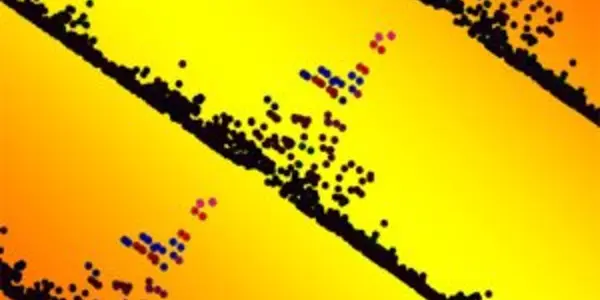
Findings published in Science will accelerate the search for genes involved in human disease. The report provides a first genome-wide view of how the unique composition of genetic variation within each of us leads to unique patterns of gene activity.
By defining those genetic variants with a biological effect, the results will help prioritise regions of the genome that are investigated for association with disease.

Using artificial atoms on a chip, Yale physicists have taken the next step toward quantum computing by demonstrating that the particle nature of microwave photons can now be detected, according to a report spotlighted in the February 1 issue of the journal Nature.
Quantum theories are often considered to apply best to processes that happen on the smallest scale of atoms and molecules. By making artificial atoms larger — to a size that is nearly visible — and using microwaves as the source of energy, the collaborative research from the laboratory of Professor Robert Schoelkopf and the theory group of Professor Steven Girvin in the departments of Applied Physics and Department of Physics at Yale created an electronic circuit that stores and measures individual microwave photons.