Brain Circuit Linked To Pregnancy Food Cravings Identified
Pregnant women have experienced exotic food cravings since recorded history began. This may be why.
Pregnant women have experienced exotic food cravings since recorded history began. This may be why.


Archaeologists are now turning to forensic crime lab techniques to hunt for dyes, paint, and other decoration in prehistoric textiles.
Although ancient fabrics can offer clues about prehistoric cultures, often their colors are faded, patterns dissolved, and fibers crumbling. Forensic photography can be used as an inexpensive and non-destructive tool to analyze these artifacts more efficiently, according to new Ohio State University research.
An image of a Hopewell textile retrieved from Ohio Seip burial mounds in southern Ohio using ultraviolet reflectance. (From photos by Christel Baldia and Kathryn Jakes; reprinted from The Journal of Archaeological Science, Vol.
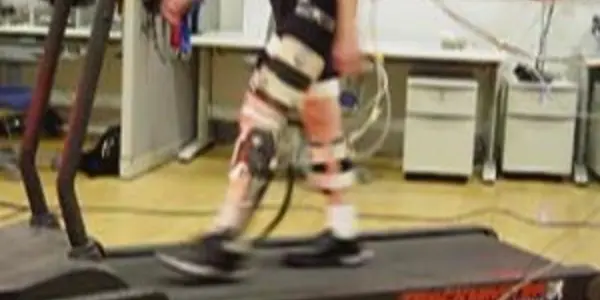
A robotic exoskeleton controlled by the wearer's own nervous system could help users regain limb function, which is encouraging news for people with partial nervous system impairment, say University of Michigan researchers.
The ankle exoskeleton developed at U-M was worn by healthy subjects to measure how the device affected ankle function.

People’s long-term satisfaction with their lives often parallels that of their spouse, says a University of Toronto researcher in a study that deals a blow to theories that individual happiness depends mainly on genetic disposition.
Ulrich Schimmack of the University of Toronto at Mississauga’s psychology department and Richard Lucas of the University of Michigan studied the similarity in life satisfaction of more than 800 German married couples. They found that individuals’ reports of increased or decreased life satisfaction closely matched those of their spouses over a period of 21 years.

Supernovae stand out in the sky like cosmic lighthouses. Scientists at the Max Planck Institute for Astrophysics and at the National Astronomical Institute of Italy have now found a way to use these cosmic beacons to measure distances in space more accurately. The researchers have been able to show that all supernovae of a certain type explode with the same mass and the same energy - the brightness depends only on how much nickel the supernova contains. This knowledge has allowed the researchers to calibrate the brightness of supernovae with greater precision.
Johns Hopkins Kimmel Cancer Center scientists have found a set of "master switches" that keep adult blood-forming stem cells in their primitive state. Unlocking the switches' code may one day enable scientists to grow new blood cells for transplant into patients with cancer and other bone marrow disorders.
The scientists located the control switches not at the gene level, but farther down the protein production line in more recently discovered forms of ribonucleic acid, or RNA.

Temperatures are rising on Earth, which is heating up the debate over global warming and the future of our planet, but what may be needed most to combat global warming is a greater focus on adapting to our changing planet, says a team of science policy experts writing in this week's Nature magazine.
While many consider it taboo, adaptation to global climate change needs to be recognized as just as important as "mitigation," or cutting back, of greenhouse gases humans pump into Earth's atmosphere. The science policy experts, writing in the Feb.
In recent years, scientists have discovered that a family of enzymes called sirtuins can dramatically extend life in organisms as diverse as yeast, worms, and flies. They may also be able to control age-associated metabolic disorders, including obesity and type II diabetes.
Naturally occurring substances have been shown to activate sirtuins, including a constituent of red wine called resveratrol -- although an individual would need to drink about two cases of wine a day to derive a clinically effective dose of resveratrol. Still, the findings have energized a number of scientific groups and biotechnology companies, all of which are now eagerly searching for drug candidates able to boost sirtuin activity.
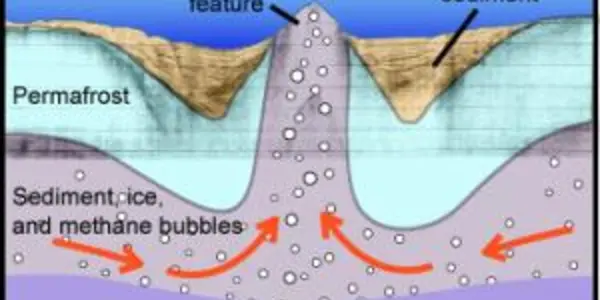
According to a recent paper published by MBARI geologists and their colleagues, methane gas bubbling through seafloor sediments has created hundreds of low hills on the floor of the Arctic Ocean. These enigmatic features, which can grow up to 40 meters (130 feet) tall and several hundred meters across, have puzzled scientists ever since they were first discovered in the 1940s.
This conceptual drawing (not to scale) shows Paull's hypothesis that methane gas from deep hydrate deposits could push sediment up from below the ocean bottom to create a pingo-like feature. The gray lines in the background are from a seismic profile through one of these enigmatic features. (Image: Copyright 2007 MBARI)
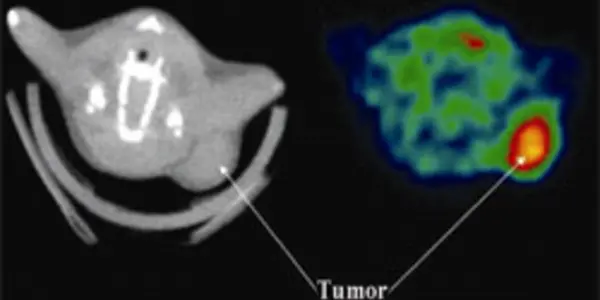
Cancer cells are sick, but they keep growing because they don't react to internal signals urging them to die. Now researchers at Washington University School of Medicine in St. Louis have found an efficient way to get a messenger into cancer cells that forces them to respond to death signals. And they did it using one of the most sinister pathogens around — HIV.
"HIV knows how to insert itself into many different types of cells," says senior author William G. Hawkins, M.D., assistant professor of surgery and a member of the Siteman Cancer Center at the School of Medicine and Barnes-Jewish Hospital. "A portion of the HIV protein called TAT can transport biologically active compounds into cells. TAT is small, but it can move massive molecules.

Physicists at JILA have demonstrated that the warmer a surface is, the stronger its subtle ability to attract nearby atoms, a finding that could affect the design of devices that rely on small-scale interactions, such as atom chips, nanomachines, and microelectromechanical systems (MEMS).
JILA scientists measured how temperature affects the Casimir-Polder force using an apparatus that holds four small squares of glass inside a vacuum chamber. A cloud of ultracold atoms in a Bose-Einstein Condensate (BEC) was held a few micrometers below one piece of glass, and the force was calculated based on the wiggling of the BEC. Warmer glass magnified the attraction between the surface and the atoms. (Credit: E.

Two biologists at Penn State have discovered a master regulator that controls metabolic responses to a deficiency of essential amino acids in the diet. They also discovered that this regulatory substance, an enzyme named GCN2 eIF2alpha kinase, has an unexpectedly profound impact on fat metabolism. "Some results of our experiments suggest interventions that might help treat obesity, prevent Type II diabetes and heart attacks, or ameliorate protein malnutrition," said Douglas Cavener, professor and head of the Department of Biology, who led the research along with Feifan Guo, a research assistant professor.

Physicists have for the first time stopped and extinguished a light pulse in one part of space and then revived it in a completely separate location. They accomplished this feat by completely converting the light pulse into matter that travels between the two locations and is subsequently changed back to light.
Matter, unlike light, can easily be manipulated, and the experiments provide a powerful means to control optical information.