Brain Circuit Linked To Pregnancy Food Cravings Identified
Pregnant women have experienced exotic food cravings since recorded history began. This may be why.
Pregnant women have experienced exotic food cravings since recorded history began. This may be why.


A provocative new model proposed by molecular biologist John Tower of the University of Southern California may help answer an enduring scientific question: Why do women tend to live longer than men?
That tendency holds true in humans and many other mammals as well as in the much-studied fruit fly Drosophila melanogaster.
In genetic studies of Drosophila, Tower and his team have shown that genes known to increase longevity always affect male and female flies differently.
Several neurological and psychiatric disorders, including schizophrenia, alcoholism, and Parkinson’s disease, are associated with changes in the brain that affect the nerves that communicate with each other through the naturally-produced chemical dopamine. One protein that is crucial for dopamine-mediated neuronal communication in animals is DARPP-32. However, very little is known about the function of this protein in humans.
In a study appearing online on February 8 in advance of publication in the March print issue of the Journal of Clinical Investigation, Daniel Weinberger and colleagues from the National Institutes of Health show that the gene that encodes DARPP-32 exhibits genetic variation.
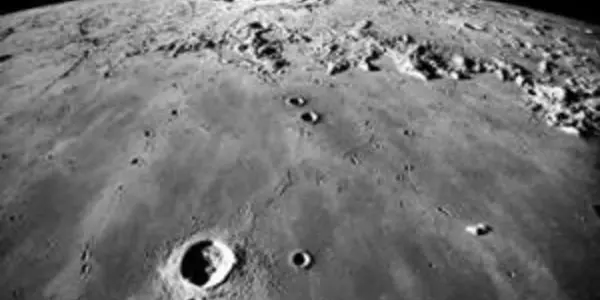
Light has been shed on the dark parts of the Moon with experiments by University of Edinburgh researchers simulating billions of years of lunar evolution.
It is generally believed the Moon was created after an early, semi molten, Earth collided with a planet the size of Mars.
The collision was so great that the orbiting debris would have formed a so-called lunar magma ocean, or liquefied rock, up to several hundred kilometres deep that would have covered the Moon's surface.
Yet until now, it has remained a mystery as to how this magma ocean cooled and how the lunar landscape evolved into white highlands and dark valleys.
This week, for the first time in humans, a heart failure patient received adult stem cells – taken from his own adipose (fat) tissue – which were processed and injected directly into the heart muscle with a special catheter. Francisco Fernandez-Avilés, M.D. performed the procedure in Madrid. The Texas Heart Institute at St. Luke’s Episcopal Hospital is leading the collaborative clinical trial which will involve 30 patients.
The trial site for the study is Hospital General Universitario Gregorio Marañón in Madrid, Spain. Dr. Fernandez-Avilés, Professor of Cardiovascular Medicine and Chief of Cardiology Service at Gregorio Marañón and Dr.

Researchers at the University of Illinois at Urbana-Champaign have developed a novel computational image-forming technique for optical microscopy that can produce crisp, three-dimensional images from blurry, out-of-focus data.
Called Interferometric Synthetic Aperture Microscopy, ISAM can do for optical microscopy what magnetic resonance imaging did for nuclear magnetic resonance, and what computed tomography did for X-ray imaging, the scientists say.
Photo courtesy of Beckman Institute
Representations of a tissue phantom where the scattering points
would represent cells, and images before and after ISAM are shown.

Video games that contain high levels of action, such as Unreal Tournament, can actually improve your vision.
Researchers at the University of Rochester have shown that people who played action video games for a few hours a day over the course of a month improved by about 20 percent in their ability to identify letters presented in clutter—a visual acuity test similar to ones used in regular ophthalmology clinics.
In essence, playing video game improves your bottom line on a standard eye chart.
Perhaps Daphne Bavelier and Shawn Green will work on reasons to skip school and eat Fritos next. (Image courtesy of University of Rochester)

A giant elliptical galaxy seen in an image from the Hubble Space Telescope is the closest gravitational lens yet known, according to information released by the Hubble Heritage Project Tuesday (Feb. 6).
John Blakeslee, an assistant professor with the Department of Physics and Astronomy at Washington State University, working with colleagues from the University of Hawaii and the University of Durham in England, targeted the galaxy for a closer look by Hubble.
Elliptical Galaxy ES) 325-G004 in the Abell Cluster S0740. (Credit: NASA, ESA, and The Hubble Heritage Team (STScI/AURA) / Acknowledgment: J. Blakeslee (Washington State University))

A greenhouse gas that has become the bane of modern society may have saved Earth from completely freezing over early in the planet's history, according to the first detailed laboratory analysis of the world's oldest sedimentary rocks.
Scientists have for years theorized that high concentrations of greenhouse gases could have helped Earth avoid global freezing in its youth by allowing the atmosphere to retain more heat than it lost.
Many human proteins are not as good as they might be because the gene sequences that code for them have a double role which slows down the rate at which they evolve, according to new research published in PLoS Biology.
By tweaking these dual role regions, scientists could develop gene therapy techniques that produce proteins that are even better than those found in nature, and could one day be used to help people recover from genetic disorders.
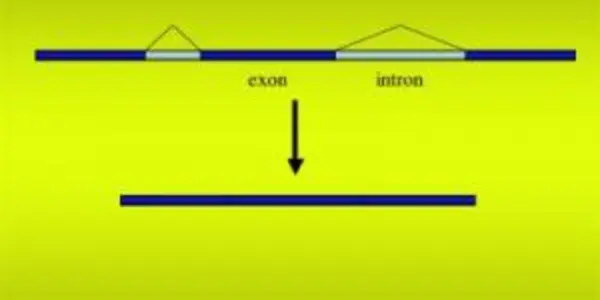
The stretch of DNA which codes for a specific protein is often interrupted by sections of apparently useless DNA – known as introns – which need to be edited out in order to produce a new protein.
Before a transcribed gene is translated into t
Wouldn't it be great if we could get computer chips to grow on trees? Or at least use the specific bonds of DNA molecules to get nanostructures to grow themselves right in the test tube? This technology could be used to build everything from tiny electronics components to machines that sequence DNA. This is shown in a dissertation from Mid Sweden University.
Building structures as tiny as a few nanometers is a major problem with today's technology. This is an important hurdle, because really tiny things can be extremely useful.
During development and during pathological processes in the adult, cells are constantly changing their function. One, well-characterized, cellular transition that occurs during development, as well as during wound healing, tissue fibrosis, and tumor metastasis, is the transition from an epithelial cell to a mesenchymal cell (often a fibroblast).
This change in cell type and function is known as epithelial-mesenchymal transition (EMT) and it has been shown that a protein known as FSP1 is important for this transition.
Debate over euthanasia continues in many countries. Opinions were divided for months in Italy over the case of Piergiorgio Welby, who died Dec. 20 when he was administered a sedative and his artificial respiration was turned off.
More recently, in Australia, cancer sufferer John Elliot traveled to Zurich, Switzerland, to put an end to his life with the aid of the organization Dignitas. As often happens with these cases, pro-euthanasia activists exploited the emotional appeal of a suffering and terminally ill patient to push for a so-called right to die.
Elliot was accompanied in his journey by Australian euthanasia advocate, Philip Nitschke, as well as a reporter from the Melbourne-based Age newspaper, the periodical reported Jan. 27.