Brain Circuit Linked To Pregnancy Food Cravings Identified
Pregnant women have experienced exotic food cravings since recorded history began. This may be why.
Pregnant women have experienced exotic food cravings since recorded history began. This may be why.


Virginia Tech researchers in computer science and biology have used the university's supercomputer, System X, to create models and algorithms that make it possible to simulate the cell cycle -- the processes leading to cell division. They have demonstrated that the new mathematical models and numerical algorithms provide powerful tools for studying the complex processes going on inside living cells.
System X. (Image courtesy of Virginia Tech)

The first major global assessment of climate change science in six years has concluded that changes in the atmosphere, the oceans and glaciers and ice caps show unequivocally that the world is warming.
The Intergovernmental Panel on Climate Change (IPCC) concludes that major advances in climate modelling and the collection and analysis of data now give scientists “very high confidence” (at least a 9 out of 10 chance of being correct) in their understanding of how human activities are causing the world to warm.

UAB (University of Alabama at Birmingham) researchers have developed a method to increase bone density in mice, a development that might have future benefit for humans in the treatment of osteoporosis and bone fracture. The research, published in the Jan. 29 issue of Proceedings of the National Academy of Sciences, involves manipulation of the Pten gene, which contributes to the process by which cells die, known as apoptosis.
"Bone density can increase either because more bone cells divide or fewer cells die due to apoptosis. Pten is a tumor suppressor gene that applies a break on the main cell survival pathway, causing cells to die," said Thomas L.
In an advance that could lead to composite materials with virtually limitless performance capabilities, a University of Wisconsin-Madison scientist has dispelled a 50-year-old theoretical notion that composite materials must be made only of "stable" individual materials to be stable overall.
Writing in the Feb. 2 issue of the journal Physical Review Letters, Engineering Physics Professor Walter Drugan proves that a composite material can be stable overall even if it contains a material having a negative stiffness, or one unstable by itself-as long as it is contained within another material that is sufficiently stable.

For the first time, scientists have observed DNA being damaged by ultraviolet (UV) light.
Ohio State University chemists and their colleagues in Germany used a special technique to watch strands of DNA in the laboratory sustain damage in real time.
They observed the most common chemical reaction among a family of reactions on the DNA molecule that are linked to sunburn, and discovered that this key reaction happens with astounding speed -- in less than one picosecond, or one millionth of one millionth of a second.
An undamaged stack of thymine bases is colored green in the DNA double helix on the left.
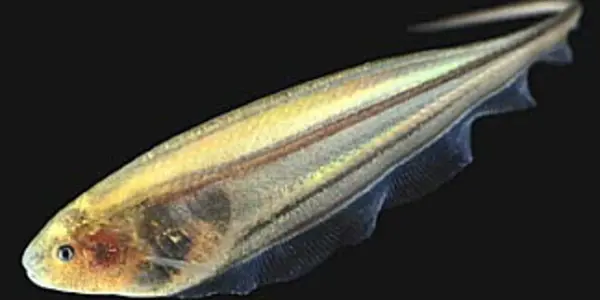
Scientists have long struggled to figure out how the brain guides the complex movement of our limbs, from the graceful leaps of ballerinas to the simple, everyday act of picking up a cup of coffee. Using tools from robotics and neuroscience, two Johns Hopkins University researchers have found some tantalizing clues in an unlikely mode of motion: the undulations of tropical fish.
The fish is a glass knifefish, which was used in the research. It is native to South America.
Photo by Will Kirk/HIPS
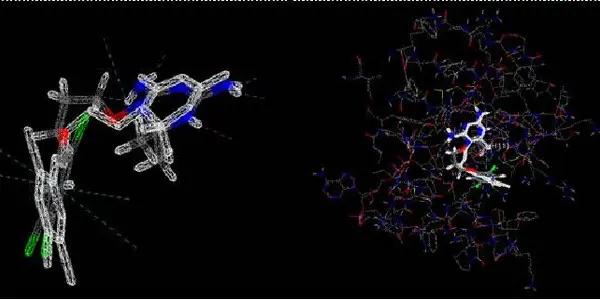
Malaria kills more than one million people each year, most of them young children living in Africa. Now physicists in the UK have shared their computers with biologists from countries including France and Korea in an effort to combat the disease.
Using an international computing Grid spanning 27 countries, scientists on the WISDOM project analysed an average of 80,000 possible drug compounds against malaria every hour. In total, the challenge processed over 140 million compounds, with a UK physics Grid providing nearly half of the computing hours used.
The computers are all part of EGEE (Enabling Grids for E-sciencE), which brings together computing Grids from different countries and disciplines.
Groundhogs and other hibernators take a very sensible approach to winter: They slip into a state of suspended animation and let the worst of the cold weather pass.
The cold prompts profound physiological changes in these animals, causing their normally fast metabolism to come almost to a stop during winter. With metabolism slowed to a crawl, the animal draws on its fat stores sparingly to make it through the winter.
Hibernation has become the focus of interesting physiological research. A hibernating squirrel's heart may fall from 300 beats per minute to just three per minute. Its oxygen consumption can drop to just 2% of normal.
Tricking a key enzyme can soothe over-excited receptors in the brain, say neuroscientists, calling this a possible strategy against stroke, Alzheimer's and other neurodegenerative diseases.
Lead author Michel Baudry of the University of Southern California, his graduate student Wei Xu and collaborators from the University of British Columbia outline their technique in the Feb. 1 issue of Neuron.
The researchers injected laboratory mice with a decoy peptide containing a snippet of a receptor that facilitates cell death in neurodegenerative diseases.

British Petroleum announced today that it has selected the University of California, Berkeley, in partnership with Lawrence Berkeley National Laboratory (LBNL) and the University of Illinois at Urbana-Champaign, to lead an unprecedented $500 million research effort to develop new sources of energy and reduce the impact of energy consumption on the environment.
The funding will create the Energy Biosciences Institute (EBI), which initially will focus its research on biotechnology to produce biofuels — that is, turning plants and plant materials, including corn, field waste, switchgrass and algae, into transportation fuels.
At a press conference this morning at UC Berkeley, Robert A. (Bob) Malone, chairman and president of BP America Inc., joined California Gov.
"Time" is the most popular noun in the English language, yet how would we tell time if we didn't have access to the plethora of watches, clocks and cell phones at our disposal?
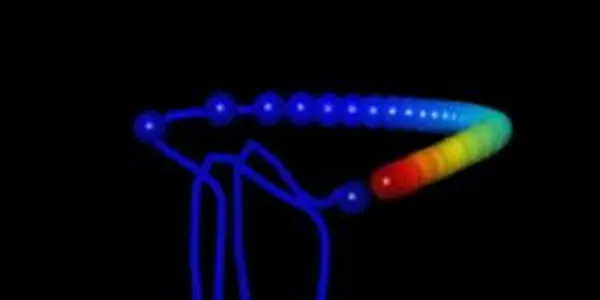
For decades, scientists have believed that the brain possesses an internal clock that allows it to keep track of time. Now a UCLA study in the Feb. 1 edition of Neuron proposes a new model in which a series of physical changes to the brain's cells helps the organ to monitor the passage of time.
The changing colors reflect how a brain cell network evolves over time in response to stimuli. (Credit: Buonomano Lab)

Assistant Professor John Howell and his Quantum Optics team at the University of Rochester have discovered a way to manipulate a light field while retaining all of the information it carries. A considerable advance in imaging technology, the new method detects subtle changes in an image over time. Using photons and atomic vapor in what is known as imaging with slow light, the new technique precisely slows the image while retaining all of its properties.
The basic setup of the experiment is a single light source (a laser), a single camera (feeding to a computer) for observation, and between them, a path for the laser beam.