Brain Circuit Linked To Pregnancy Food Cravings Identified
Pregnant women have experienced exotic food cravings since recorded history began. This may be why.
Pregnant women have experienced exotic food cravings since recorded history began. This may be why.

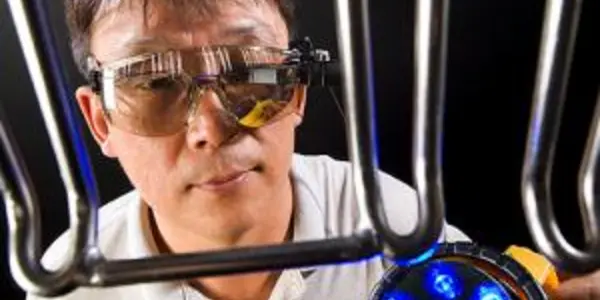
Portable inspection devices that detect food safety and quality problems are being developed by Agricultural Research Service (ARS) scientists. Recent food safety outbreaks highlight the need for "space-age" ways to prevent such problems at every step in the food production process -- from farm field to grocery store or restaurant.
Scientists led by Yud-Ren Chen at the ARS Instrumentation and Sensing Laboratory, Beltsville, Md., are designing such portable inspection devices by adapting optical technology used for remote sensing of Earth.
Prototypes include binoculars with lenses that detect fecal matter on meat, produce or processing equipment--as well as diseases or quality defects.
In releasing its latest comprehensive report, the Intergovernmental Panel on Climate Change (IPCC) focuses an important spotlight on the current state of the Earth’s climate.
Climate change is just one of the many symptoms exhibited by a planet under pressure from human activities. "Global environmental change, which includes climate change, threatens to irreversibly alter our planet," says Kevin Noone, Executive Director of the International Geosphere-Biosphere Programme (IGBP).
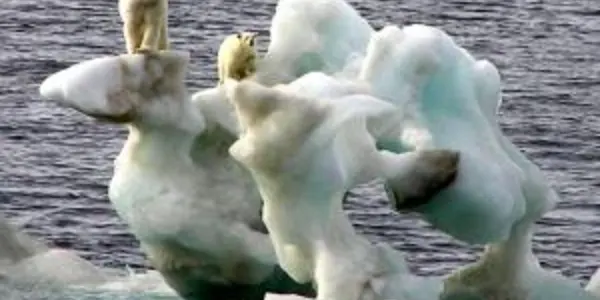
Polar bear on ice. (Image Credit: Dan Crosbie, courtesy of Canadian Ice Service / Environment Canada)

A giant cloud half the size of the United States has been imaged on Saturn’s moon Titan by the Cassini spacecraft. The cloud may be responsible for the material that fills the lakes discovered last year by Cassini's radar instrument.
Cloaked by winter's shadow, this cloud has now come into view as winter turns to spring. The cloud extends down to 60 degrees north latitude, is roughly 2400 kilometers in diameter and engulfs almost the entire north pole of Titan.
The new image was acquired on 29 December 2006, by Cassini's visual and infrared mapping spectrometer (VIMS).
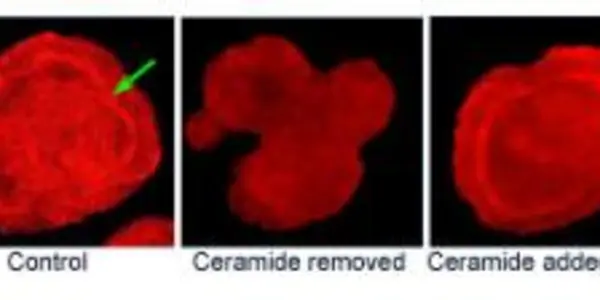
A little-known lipid plays a big role in helping us grow from a hollow sphere of stem cells into human beings, researchers have found.
They found that in the first few days of life, ceramide helps stem cells line up to form the primitive ectoderm from which embryonic tissues develop, says Dr. Erhard Bieberich, biochemist at the Medical College of Georgia.
Probably 90 percent of ceramide gathers at the top or apical end of these early stem cells, literally helping cells have direction. “We have cell polarity, an up and down, a head and foot of the cell, and that is what ceramide most likely regulates,” says Dr. Bieberich.
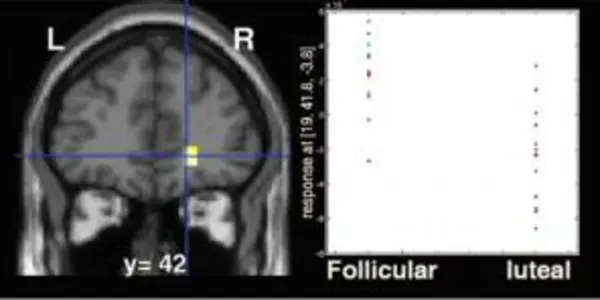
Fluctuations in sex hormone levels during women's menstrual cycles affect the responsiveness of their brains' reward circuitry, an imaging study at the National Institute of Mental Health (NIMH), a component of the National Institutes of Health (NIH), has revealed. While women were winning rewards, their circuitry was more active if they were in a menstrual phase preceding ovulation and dominated by estrogen, compared to a phase when estrogen and progesterone are present.
Brain activity in the orbitofrontal cortex (yellow), part of the brain's reward system, was increased during women's pre-ovulatory (follicular) menstrual phase compared to their-post-ovulatory (luteal) phase

Investigators from the Ludwig Institute for Cancer Research (LICR) and the University of California, San Diego (UCSD) have made a breakthrough in identifying functional elements in the human genome, according to a report published online today in Nature Genetics.
While the DNA sequence can identify genes (the ‘what’) within the genome, it cannot answer the more fundamental questions of ‘how,’ ‘when’ and ‘where’ gene products are expressed. However, the LICR team and collaborators have developed a novel method to identify and predict the ‘promoter’ and ‘enhancer’ regions that switch on transcription, the first step in gene expression.

A Georgia Tech physics group has discovered how and why the electrical conductance of metal nanowires changes as their length varies. In a collaborative investigation performed by an experimental team and a theoretical physics team, the group discovered that measured fluctuations in the smallest nanowires’ conductance are caused by a pair of atoms, known as a dimer, shuttling back and forth between the bulk electrical leads. Determining the structural properties of nanowires is a big challenge facing the future construction of nanodevices and nanotechnology. The paper appears in the January 26th issue of Physical Review Letters.
Colorized scanning electron micrograph of the device showing the two electrical leads.
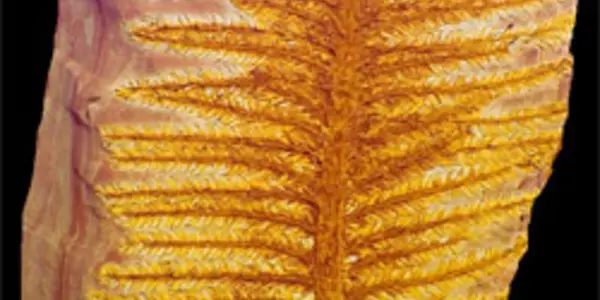
The transition from an ice age to an ice-free planet 300 million years ago was highly unstable, marked by dips and rises in carbon dioxide, extreme swings in climate and drastic effects on tropical vegetation.
"This is the best documented record we have of what happens to the climate system during long-term global warming following an ice age," said Isabel Montañez, professor of geology at the University of California, Davis, and lead author on the paper. But she added that these findings cannot be applied directly to current global warming trends.
In the mid-Permian, 300 million years ago, the Earth was in an ice age. Miles-thick ice sheets covered much of the southern continent, and floating pack ice likely covered the northern polar ocean.
Women who become pregnant in spring are more vulnerable to preterm birth than those who conceive in other seasons, according to researchers at the University of Pittsburgh.
Also, read Scientific Blogging columnist Seth Robert's interview with Brian Wansink here.

Researchers at Canada's National Institute for Nanotechnology (NINT) are learning which molecular scale factors affect the assembly and disassembly of microtubules that are part of a cell's skeleton. Microtubules control the division of all cells with a nucleus by constantly assembling at one end while they disassemble at the other.

While government leaders argue about the practicality of reducing world emissions of carbon dioxide, scientists and engineers are seeking ways to make it happen.
One group of engineers at MIT decided to focus its work on the nanostructure of concrete, the world's most widely used material.