Brain Circuit Linked To Pregnancy Food Cravings Identified
Pregnant women have experienced exotic food cravings since recorded history began. This may be why.
Pregnant women have experienced exotic food cravings since recorded history began. This may be why.


Cats living in homes where people smoke cigarettes are more than twice as likely as other cats to acquire a deadly form of cancer known as feline lymphoma, according to a first-of-its kind study in cats conducted by scientists at Tufts University School of Veterinary Medicine and the University of Massachusetts.
The study, entitled "Environmental Tobacco Smoke and Risk of Malignant Lymphoma in Pet Cats," was published in the American Journal of Epidemiology. The authors conclude that these findings offer a compelling reason for further study of the relationship between passive smoke and non-Hodgkins lymphoma in humans, which is similar to lymphoma in cats.
A drug commonly used to treat severe acne can lead to depressive behaviour in mice, according to research published in the journal Neuropsychopharmacology.
Since the drug’s introduction in the early 1980s there have been controversial reports of depression and suicidal behaviour that may have occurred in some people taking Roaccutane (Accutane in the US).
This has led to the drug’s manufacturers, Roche, including a warning in the product information that taking the medication may cause depression, psychosis and suicidal behaviour.
Electrical deep brain stimulation can dramatically alleviate depression that is resistant to other treatments, researchers have found in an initial study on six patients. The finding is important, they said, because up to 20 percent of patients with depression fail to respond to standard treatments--requiring combinations of antidepressant drugs, psychotherapy, and electroconvulsive treatment (ECT) that still may fail. The number of resistant depression patients can be large, since depression is the leading source of disability in adults under age 50 in North America.
Researchers at the University of Toronto and The Toronto Hospital have discovered a biological basis for the phantom sensations that are frequently experienced on the missing limbs of amputees. The findings of the study are published in the Jan. 22 issue of Nature.
The researchers found that the neurons in the brain that used to represent sensation in the lost limb were still functional but now driven by the stimulation of other body parts, usually the part of the body closest to the amputated limb. The investigators also found that in patients experiencing phantom pain, the sensation can be recreated by stimulating within the brain. Phantom sensations could not be elicited, however, in amputees without a history of phantom sensations.
A study of follow-up care for patients with unsatisfactory outcomes from deep brain stimulation (DBS) surgery for movement disorders offers insights into reasons for problems and proposes strategies for improved outcomes. The study is posted online today and will appear in the August print issue of Archives of Neurology, one of the JAMA/Archives journals.
According to background information in the article, since the Food and Drug Administration approved deep brain stimulation for the treatment of Parkinson's disease, essential tremor and dystonia (uncontrolled muscle movement), there has been a surge in the number of centers offering this surgical procedure, which involves implanting a device to deliver mild electrical stimulation to block the brain signals that cause tremor. There is currently no consensus regarding appropriate screening procedures, necessary training of individuals providing the therapy, the need for an interdisciplinary team, or guidelines for the management of complications, the authors report.
Deep brain stimulation via electrodes implanted on both sides of the brain markedly improves the motor skills of patients with advanced Parkinson's Disease, says a new long-term study by researchers at the University of Toronto and Toronto Western Hospital.
"We saw a pronounced decrease in the motor scores associated with Parkinson's Disease - the tremors, stiffness and slowness - and this benefit was persistent through the course of the long-term followup," says Dr. Anthony Lang, professor in U of T's division of neurology, the Jack Clark Chair in Parkinson's Disease Research at the Centre for Research in Neurodegenerative Diseases and director of the Movement Disorders Clinic at Toronto Western Hospital, University Health Network. He and his colleagues used the Unified Parkinson's Disease Rating Scale (UPDRS) to evaluate both the features of the disease as well as the side-effects of medication. They found motor scores decreased an average of 48 per cent. "This is quite substantial when you compare it to other trials of therapy for Parkinson's Disease," he says.

The first scientific report into the causes and impact of Lusi, the Indonesian mud volcano, reveals that the 2006 eruption will continue to erupt and spew out between 7,000 and 150,000 cubic metres of mud a day for months, if not years to come, leaving at least 10 km2 around the volcano vent uninhabitable for years and over 11,000 people permanently displaced.
The paper by a Durham University-led team and published in the February issue of GSA Today1, reveals that the eruption was almost certainly manmade and caused by the drilling of a nearby exploratory borehole2 looking for gas, reinforcing the possible explanation in a UN report3 from July last year.
Image of a gryphon, which occur around the site of a mud volcano.
Can network interference be used to expand and enhance communication for wireless devices such as cell phones, computers and personal digital assistants?
Daniela Tuninetti, assistant professor of electrical and computer engineering, explained that this seemingly illogical concept is not all that strange if you take a closer look at what is going on. She has received a five-year, $400,000 National Science Foundation CAREER Award to establish a theoretical foundation for putting this idea into use through a concept called collaborative communications.
"Interference due to other communications devices is not just noise," Tuninetti said.
Bergmann`s rule is one of the most studied and controversial “ecogeographical” patterns, and refers to the increasing body size of organisms towards higher latitudes.
Although it has been studied since the mid 19th Century, it is not until now that new statistical techniques have made it possible to disentangle the underlying influences of evolutionary history and ecology.
In a new study in the journal Ecography, an inter¬national team of researchers have analyzed Bergmann`s rule in European carnivore mammals. Their approch allows them to, for the first time, partition body mass variation into historical and ecological components.
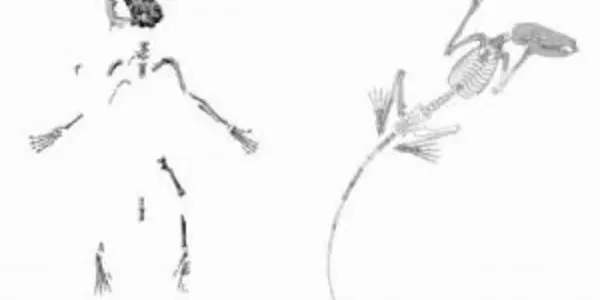
The origins and earliest branches of primate evolution are clearer and more ancient by 10 million years than previous studies estimated, according to a study featured on the cover of the Jan. 23 print edition of the Proceedings of the National Academy of Sciences.
The paper by researchers at Yale, the University of Winnipeg, Stony Brook University, and led by University of Florida paleontologist Jonathan Bloch reconstructs the base of the primate family tree by comparing skeletal and fossil specimens representing more than 85 modern and extinct species.
A University of Florida-led study has determined that Titanis walleri, a prehistoric 7-foot-tall flightless “terror bird,” arrived in North America from South America long before a land bridge connected the two continents.
UF paleontologist Bruce MacFadden said his team used an established geochemical technique that analyzes rare earth elements in a new application to revise the ages of terror bird fossils in Texas and Florida, the only places in North America where the species has been found.

Despite the icy cold and darkness, beneath the frozen surface of the sea in Antarctica thrives a rich and complex array of plants and animals. But what will happen to all those creatures if global warming reduces the ice-cover, as is predicted for coming decades?
UNSW marine ecologists Dr Emma Johnston and Graeme Clark have been working with the Australian Antarctic Division to survey marine communities along the striking coast of Wilkes Land, east Antarctica.
The stark beauty of Antarctica's ice hides a wealth of marine life. Copyright Graeme Clark UNSW.