You Feel Colder As You Age: The Science Reason Why
Older people report feeling colder, enough that it is clearly happening, but why has been a mystery. Until now.
Older people report feeling colder, enough that it is clearly happening, but why has been a mystery. Until now.


A pre-clinical study led by Virginia Commonwealth University Massey Cancer Center and Department of Internal Medicine researchers suggests that an experimental drug known as dinaciclib could improve the effectiveness of certain multiple myeloma and myeloid leukemia therapies. The study, recently published in the journal Molecular Cancer Therapeutics, showed that dinaciclib disrupted a cell survival mechanism known as the unfolded protein response (UPR). Without the UPR, multiple myeloma and myeloid leukemia cells were unable to combat damage caused by some anti-cancer agents.

BLOOMINGTON -- A new Indiana University study that examines the brain activity of alcohol-dependent women compared to women who were not addicted found stark and surprising differences, leading to intriguing questions about brain network functions of addicted women as they make risky decisions about when and what to drink.
The study used functional magnetic resonance imaging, or fMRI, to study differences between patterns of brain network activation in the two groups of women. The findings indicate that the anterior insular region of the brain may be implicated in the process, suggesting a possible new target of treatment for alcohol-dependent women.
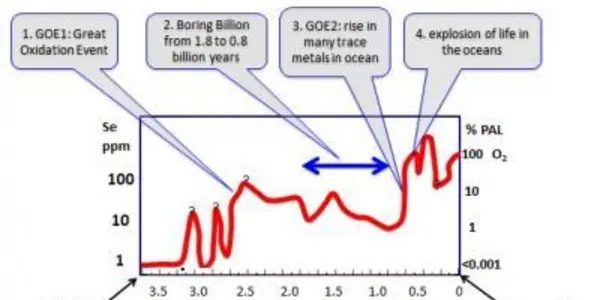
The first life developed in ancient oceans some 3.6 billion years ago, but then nothing much happened. For a billion years, we remained pretty much a layer of slime.
Then 550 million years ago, evolution came roaring back and here we are today. So what was the hold-up during a billion boring years?
According to University of Tasmania geologist Professor Ross Large and colleagues, the key was a lack of oxygen and nutrient elements, which placed evolution in a precarious position. "During that billion years, oxygen levels declined and the oceans were losing the ingredients needed for life to develop into more complex organisms."
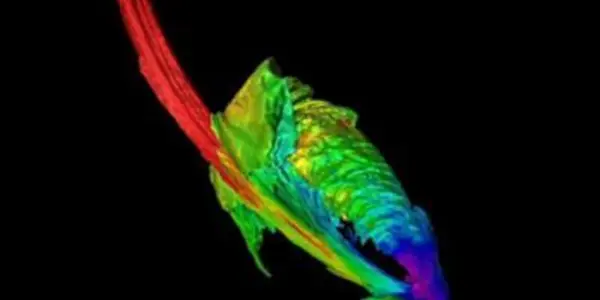
How accurately can you simulate the universe's most violent events?
Enrico Ramirez-Ruiz wanted to find out, so when the first detailed observations of a star being ripped apart by a black hole were reported in 2012 (Gezari et al., Nature), he was eager to compare the data with his numerical model.
He was also highly skeptical of one of the published conclusions: that the disrupted star was a rare helium star.
"I was sure it was a normal hydrogen star and we were just not understanding what's going on," said Ramirez-Ruiz, a professor of astronomy and astrophysics at the University of California, Santa Cruz.

Primary care doctors are not quick to prescribe antihypertensive medication to young people even after an average of 20 months of high blood pressure. Young adults who are white, male, not on Medicaid and not frequent clinic visitors are especially less likely to receive medication. These are the results of a study¹ by a research team at the University of Wisconsin School of Medicine and Public Health in the United States led by Heather Johnson. It appears in the Journal of General Internal Medicine², published by Springer.
Bottle gourds traveled the Atlantic Ocean from Africa and were likely domesticated many times in various parts of the New World, according to a team of scientists who studied bottle gourd genetics to show they have an African, not Asian ancestry.
"Beginning in the 1950s we thought that bottle gourds floated across the ocean from Africa," said Logan Kistler, post-doctoral researcher in anthropology, Penn State. "However, a 2005 genetic study of gourds suggested an Asian origin."
Domesticated bottle gourds are ubiquitous around the world in tropical and temperate areas because, while they are edible when young, the mature fruit make ideal lightweight, waterproof, liquid-carrying vessels.

WASHINGTON D.C. Feb. 18, 2014 -- Understanding how antibodies work is important for designing new vaccines to fight infectious diseases and certain types of cancer and for treating disorders of the immune system in animals and humans.
In research to be presented at the 58th Annual Biophysical Society Meeting, taking place in San Francisco from Feb. 15-19, Dr. Damian Ekiert, who is now at the University of California, San Francisco, will describe research he conducted as part of a team of researchers from The Scripps Research Institute in La Jolla, Calif.
In San Francisco, Ekiert will explain how the immune systems of cows are used to understand the diversity of antibodies and how that knowledge could improve the health of both people and livestock.

WASHINGTON D.C. Feb. 18, 2014 -- Calico cats, renowned and beloved for their funky orange and black patchwork or "tortoiseshell" fur, can thank X chromosome inactivation or "silencing" for their unique look.
A team of University of California San Francisco (UCSF) researchers is striving to unlock the mystery of how one X chromosome can be rendered nearly completely inactive. They will present their latest results at the 58th Annual Biophysical Society Meeting, which takes place Feb. 15-19, 2014, in San Francisco, Calif.

WASHINGTON D.C. Feb. 18, 2014 -- To better understand the causes of male infertility, a team of Bay Area researchers is exploring the factors, both physiological and biochemical, that differentiate fertile sperm from infertile sperm. At the 58th Annual Biophysical Society Meeting, which takes place Feb. 15-19, 2014, in San Francisco, Calif., the team will present its work to identify and characterize proteins known as ion channels, which are crucial for sperm fertility and expressed within a sperm cell's plasma membrane.

RICHLAND, Wash. – Scientists have created a microbattery that packs twice the energy compared to current microbatteries used to monitor the movements of salmon through rivers in the Pacific Northwest and around the world.
The battery, a cylinder just slightly larger than a long grain of rice, is certainly not the world's smallest battery, as engineers have created batteries far tinier than the width of a human hair. But those smaller batteries don't hold enough energy to power acoustic fish tags. The new battery is small enough to be injected into an organism and holds much more energy than similar-sized batteries.
Coral Gables, Fla. (Feb. 17, 2014) -- There is a big effort in industry to produce electrical devices with more and faster memory and logic. Magnetic memory elements, such as in a hard drive, and in the future in what is called MRAM (magnetic random access memory), use electrical currents to encode information. However, the heat which is generated is a significant problem, since it limits the density of devices and hence the performance of computer chips.
Scientists are now proposing a novel approach to achieve greater memory density while producing less heat: by using an electric field instead of a current to turn magnetism on and off, thereby encoding the electrical devices.

NASHVILLE, Tenn. – To develop correctly, baby hearts need rhythm...even before they have blood to pump.
"We have discovered that mechanical forces are important when making baby hearts," said Mary Kathryn Sewell-Loftin, a Vanderbilt graduate student working with a team of Vanderbilt engineers, scientists and clinicians attempting to grow replacement heart valves from a patient's own cells.
In an article published last month in the journal Biomaterials the team reported that they have taken an important step toward this goal by determining that the mechanical forces generated by the rhythmic expansion and contraction of cardiac muscle cells play an active role in the initial stage of heart valve formation.