Kids Helping Kids Is Universal - But Cultures Help Differently
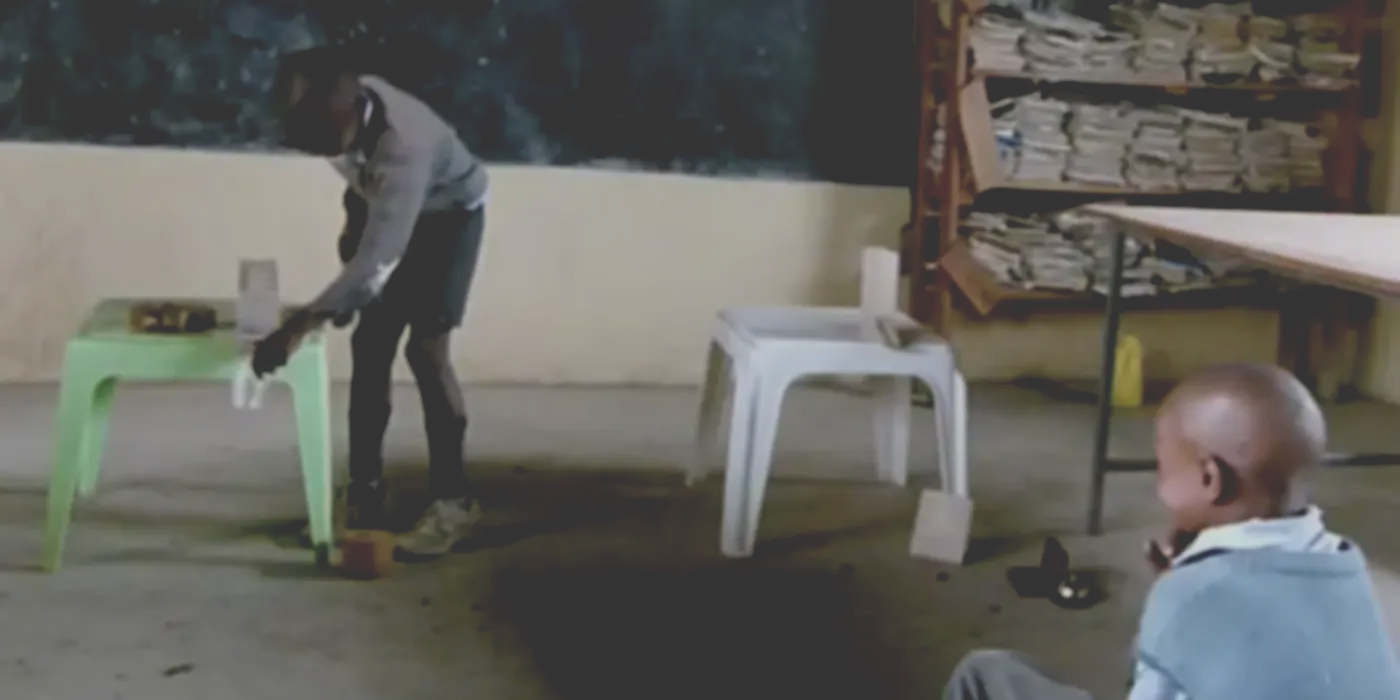
A simple game reveals a universal instinct in kids
A simple game reveals a universal instinct in kids


For the first time, an international team of astrophysicists, including Lawrence Livermore National Laboratory scientists, have unraveled how stars blow up in supernova explosions.
Using NASA's Nuclear Spectroscopic Telescope Array (NuSTAR) – a high-energy X-ray observatory - the international collaboration created the first-ever map of radioactive material in a supernova remnant, named Cassiopeia A, or Cas A for short. The findings reveal how shock waves likely rip apart massive dying stars, and ultimately end their lives.
A reduced risk of cervical lesions among Danish girls and women at the population level is associated with use of a quadrivalent HPV vaccine after only six years, according to a new study published February 19 in the Journal of the National Cancer Institute.
The synthetic chemicals used in the packaging, storage, and processing of foodstuffs might be harmful to human health over the long term, warn environmental scientists in a commentary in the Journal of Epidemiology and Community Health.
This is because most of these substances are not inert and can leach into the foods we eat, they say.
Despite the fact that some of these chemicals are regulated, people who eat packaged or processed foods are likely to be chronically exposed to low levels of these substances throughout their lives, say the authors.
And far too little is known about their long term impact, including at crucial stages of human development, such as in the womb, which is "surely not justified on scientific grounds," the authors claim.

PROVIDENCE, R.I. [Brown University] — Out of an effort to account for what seemed in airborne images to be unusually large tree growth in a Hawaiian forest, scientists at Brown University and the Carnegie Institution for Science have developed a new mathematical model that predicts how trees compete for space in the canopy.
What their model revealed for this particular forest of hardy native Metrosideros polymorpha trees on the windward slope of Manua Kea, is that an incumbent tree limb greening up a given square meter would still dominate its position two years later a forbidding 97.9 percent of the time. The model described online in the journal Ecology Letters could help generate similar predictions for other forests, too.

Our brains may not be optimized for recalling things we hear, the way we are good at remembering things we see or touch.
Psychologists doing a study of over 100 University of Iowa college students found that they were less able to recall a variety of sounds the way they could visuals and things they felt.
In an experiment testing short term-memory, participants were asked to listen to pure tones they heard through headphones, look at various shades of red squares, and feel low-intensity vibrations by gripping an aluminum bar.
Each set of tones, squares and vibrations was separated by time delays ranging from one to 32 seconds.
By growing “mini-livers” from adult mouse stem cells, the road may be paved to replacing, reducing or refining the use of animals in science.Dr. Meritxell Huch from the Gurdon Institute at Cambridge received the National Centre for the Replacement, Refinement and Reduction of Animals in Research (NC3Rs) 3Rs Prize for developing a method that enables adult mouse stem cells to grow and expand into fully functioning three-dimensional liver tissue.

If climate change sends us all back to the Stone Age, we wouldn't be the first culture. Or at least to the Bronze Age.
It used to be that changes in climate were simply history, now they are an indictment of everything we might hold dear, like electricity.
4,100 years ago, write scholars in Geology, an abrupt weakening of the summer monsoon affected northwest India and the resulting drought coincided with the beginning of the decline of the metropolis-building Indus civilization that spanned present-day Pakistan and India.

Canada has gotten a bizarre sort of entrepreneurial in the last decade. With Toronto mayor Rob Ford making headlines and a booming ecstasy industry, they have become a party destination.
And that success has led to even newer designer highs which are flooding the drug market.
"The chemists who are making these drugs are coming up with about 10 new drugs per year; the legislation cannot keep up with the market," said University of Alberta pharmacologist Alan Hudson, who studies how ecstasy and other drugs affect brain neurochemistry. "The best way forward is to educate people that they're playing Russian roulette—the health risks from taking these drugs are high, and potentially lethal."
Numerous studies have concluded that children who were breastfed score higher on IQ tests and perform better in school.
Why would that be? Is it the mother-baby bonding time, something in breast milk or other attributes of families that have mothers who breastfeed their babies?
Sociologists from Brigham Young University think they have the answer and pinpoint two sources of this cognitive boost: Responding to children's emotional cues and reading to children starting at 9 months of age. Breastfeeding mothers tend to do both of those things, said lead author Ben Gibbs.

Once a month, millions of women change their economic behavior and become more focused on their social standing relative to other women, says a paper written by scholars from The University of Texas at San Antonio and the University of Minnesota.
Why are women such slaves to the moon? It's the ovulatory cycle, they assert, and it alters women's behavior by subconsciously motivating them to outdo other women.
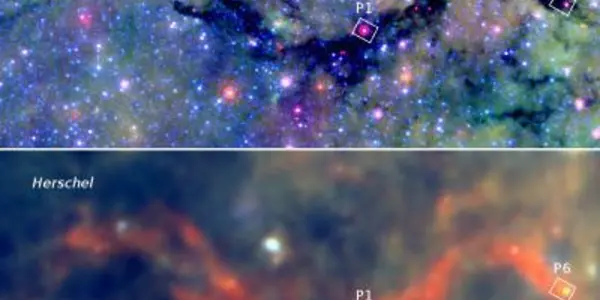
The Smithsonian's Submillimeter Array (SMA) telescope has providec the most detailed view yet of stellar nurseries within the Snake nebula and what they found lends new insight into how cosmic seeds can grow into massive stars.
Stretching across almost 100 light-years of space, the Snake nebula is located about 11,700 light-years from Earth in the direction of the constellation Ophiuchus.
In images from NASA's Spitzer Space Telescope it appears as a sinuous, dark tendril against the starry background, thus the name. It was targeted in the new study because it shows the potential to form many massive stars - stars that are 8 times heavier than our Sun.

Wind farms are not very good. Yes, politicians embrace them because the unions advocating them donate heavily to campaigns, and environmentalists advocate them because they always advocate something new until it becomes popular (natural gas the 1980s, ethanol in the 1990s, then wind - anything but nuclear) but aside from a lot of dead endangered birds, wind hasn't helped much.But concern that wind farms would cause more global warming are overblown. They don't help, and they are unsightly and ridiculously expensive, but they sure don't hurt, even though they were previously implicated in more heat and rainfall in Europe.