Kids Helping Kids Is Universal - But Cultures Help Differently
A simple game reveals a universal instinct in kids
A simple game reveals a universal instinct in kids


MAYWOOD, IL – New insights into the physiological causes of depression are leading to treatments beyond common antidepressants such as Prozac and Zoloft, researchers are reporting in the in the journal Current Psychiatry.
Depression treatments on the horizon include new medications, electrical and magnetic stimulation of the brain and long-term cognitive behavioral therapy for stress management.
Authors are Murali Rao, MD, and Julie M. Alderson, DO. Rao is professor and chair of the Department of Psychiatry and Behavioral Neurosciences at Loyola University Chicago Stritch School of Medicine, and Alderson is a resident at East Liverpool City Hospital in East Liverpool, Ohio.
PHILADELPHIA – Eating foods that contain vitamin C may reduce your risk of the most common type of hemorrhagic stroke, according to a study released today that will be presented at the American Academy of Neurology's 66th Annual Meeting in Philadelphia, April 26 to May 3, 2014.
Vitamin C is found in fruits and vegetables such as oranges, papaya, peppers, broccoli and strawberries. Hemorrhagic stroke is less common than ischemic stroke, but is more often deadly.
Crohn's disease, a type of inflammatory bowel disease, is a condition that occurs when your body's immune system mistakenly attacks and destroys healthy body tissue. The exact cause of Crohn's disease is unknown.
A new report in the Journal of Leukocyte Biology shows for the first time precisely what type of immune cells are involved in driving the inflammation process in the disease. With this knowledge, new compounds can be identified which reduce the activity of these cells or lessen their inflammatory effects.

Astronomers studying nearby galaxy M83 have found a new super-powered small black hole, named MQ1.
M83, the iconic Southern-sky galaxy, is being mapped with the Hubble Space and Magellan telescopes (detecting visible light), the Chandra X-ray Observatory (detecting light in X-ray frequencies), the Australia Telescope Compact Array and the Very Large Array (detecting radio waves).
Astronomers have found a few compact objects that are as powerful as MQ1, but have not been able to work out the size of the black hole contained within them until now. The team observed the MQ1 system with multiple telescopes and discovered that it is a standard-sized small black hole, rather than a slightly bigger version that was hypothesized to account for all its power.

We often think of the migration of Asians into America as a event that occurred when the Bering Sea was lower: They basically went over the land bridge that existed, from one part to another.
Genetic and environmental evidence indicates instead that it was instead a conservative process and that they spent 10,000 years in shrubby lowlands on the broad land bridge that once linked Siberia and Alaska.
University of Utah anthropologist Dennis O'Rourke and colleagues seek to reconcile existing genetic and environmental evidence for human habitation on the Bering land bridge – also called Beringia – with an absence of archaeological evidence.
Nobel laureate James D. Watson, the co-discoverer of the double-helix structure of DNA, has published a hypothesis on the causation of type 2 diabetes - that diabetes, dementias, cardiovascular disease, and some cancers are linked to a failure to generate sufficient biological oxidants, called reactive oxygen species (ROS).
Watson does not question that pancreatic tissue in people with type 2 diabetes is indeed inflamed. But he does present a novel theory of why. "The fundamental cause, I suggest, is a lack of biological oxidants, not an excess. The prevalent view of type 2 diabetes is that an excess of intracellular oxidation causes inflammation, which in turn kills cells in pancreatic tissue."
BOWLING GREEN, O.—They keep tanning, even after turning a deep brown and experiencing some of the negative consequences. Skin cancer is among the most common, preventable types of the disease, yet many continue to tan to excess.
Research from Lisham Ashrafioun, a Bowling Green State University Ph.D. student in psychology, and Dr. Erin Bonar, an assistant professor of psychiatry at the University of Michigan Addiction Research Center and a BGSU alumna, shows that some who engage in excessive tanning may also be suffering from obsessive-compulsive (OCD) and body dysmorphic disorders (BDD). Ashrafioun and Bonar also looked at whether tanning should be classified as an addiction.
A paper published in EPJ H provides the first English translation and an analysis of one of Albert Einstein's little-known papers, "On the cosmological problem of the general theory of relativity." Published in 1931, it features a forgotten model of the universe, while refuting Einstein's own earlier static model of 1917. In this paper, Einstein introduces a cosmic model in which the universe undergoes an expansion followed by a contraction. This interpretation contrasts with the monotonically expanding universe of the widely known Einstein-de Sitter model of 1932.
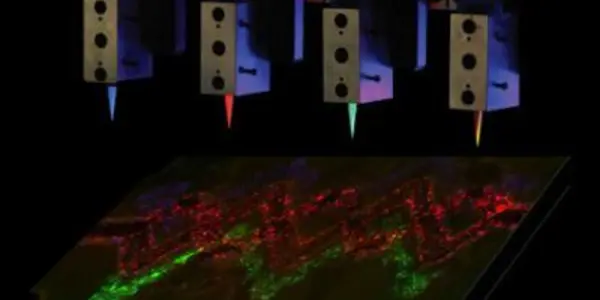
BOSTON — A new bioprinting method developed at the Wyss Institute for Biologically Inspired Engineering at Harvard University and the Harvard School of Engineering and Applied Sciences (SEAS) creates intricately patterned 3D tissue constructs with multiple types of cells and tiny blood vessels. The work represents a major step toward a longstanding goal of tissue engineers: creating human tissue constructs realistic enough to test drug safety and effectiveness.
The method also represents an early but important step toward building fully functional replacements for injured or diseased tissue that can be designed from CAT scan data using computer-aided design (CAD), printed in 3D at the push of a button, and used by surgeons to repair or replace damaged tissue.
New research from psychologists at the universities of Kent and Limerick has found that music that is felt to be 'beautiful but sad' can help people feel better when they're feeling blue.
The research investigated the effects of what the researchers described as Self-Identified Sad Music (SISM) on people's moods, paying particular attention to their reasons for choosing a particular piece of music when they were experiencing sadness - and the effect it had on them.
With its narrow connection to the North Sea, strong currents, a large number of river estuaries and a bottom profile marked by ridges, basins and troughs, the Baltic represents an inland sea with highly different water qualities. The fact that these morphological and hydrographic conditions can also influence the fate of fish stocks has now been shown by a team of fisheries biologists from GEOMAR Helmholtz Centre for Ocean Research Kiel and the National Institute of Aquatic Resources (DTU Aqua) at the Technical University of Denmark.

Most of the public doesn't know this, but some people are allergic to metal. 10 percent of the Germany public is allergic to nickel, according to background information in a new paper.
But medical implants use nickel. Nickel-titanium alloys are increasingly used as material for cardiovascular implants in minimal invasive surgery and, once implanted, these alloys can release small amounts of nickel due to corrosion. Is that dangerous?