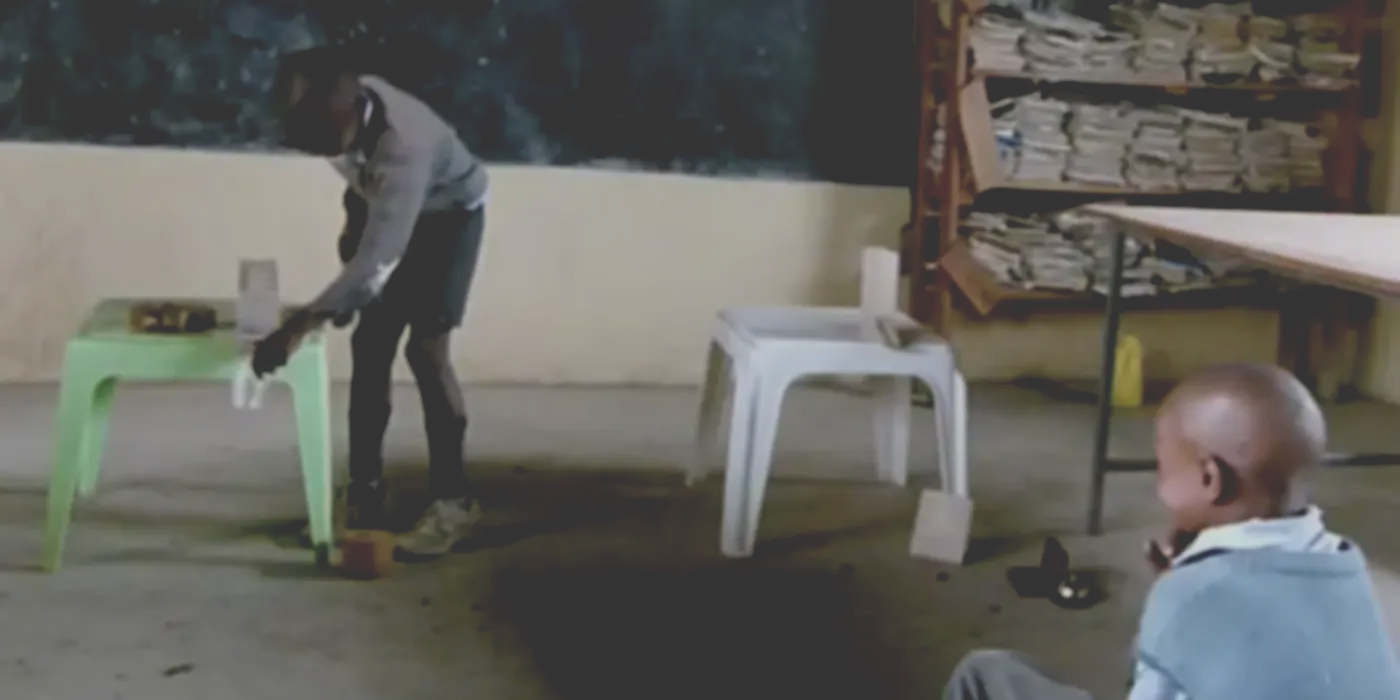
Kids Helping Kids Is Universal - But Cultures Help Differently
A simple game reveals a universal instinct in kids
A simple game reveals a universal instinct in kids


The risk of a kidney donor developing kidney failure in their kidney is much lower than in the population at large, even when compared with people who have two kidneys, according to new Johns Hopkins research.
A recent analysis found that DietBet, a web-based commercial weight loss program that pairs financial incentives with social influence, delivers significant weight loss to participants.
On Dietbet.com, players join a game to lose weight while betting money on themselves. Players all have four weeks to lose four percent of their starting weight. At the end of week four, all players who have lost at least 4 percent of their initial body weight are deemed "winners" and split the pool of money collected at the start of the game.
To verify weight losses, players submit photo-based evidence of their weigh-ins to DietBet's referees at the start and end of each game.

The Affordable Care Act has a lot of costs and requirements that don't seem to make sense - requiring that plans include maternity coverage for post-menopausal women and single men comes to mind - and adding social workers into health care teams would seem to be another example of that.
Not so, said former Harvard Pilgrim Health Care CEO and current gubernatorial candidate Charles D. Baker Jr., keynote speaker at the Boston College Graduate School of Social Work Forum "Health Care Reform: From Policy to Practice", who believes that the social workers in his audience were going to bring an expansive view of care options under a "team-based care" approach.
Recent decades may have been the wettest in 3,500 years in North East Tibet – according to climate researchers at the University of East Anglia (UK) and the Chinese Academy of Sciences (Lanzhou, China).
Researchers looked at 3,500-year-long tree ring records from North East Tibet to estimate annual precipitation. They found that recent decades have likely been the wettest on record in this semi-arid region.
The precipitation records have been reconstructed using sub-fossil, archaeological and living juniper tree samples from the north-eastern Tibetan Plateau. They reveal a trend towards wider growth rings, implying moister growing conditions – with the last 50 years seeing increasing amounts of rainfall.
From keeping up a daily exercise routine to eating healthy foods and avoiding impulse purchases, self-control is hard work. Ironically, when it comes to making decisions about our bodies, a new study in the Journal of Consumer Research finds we make better health care decisions when we're feeling tired and run down.
"We proposed that people are more motivated to engage in healthful behavior when they are depleted and perceive their safety to be at stake," write authors Monika Lisjak (Erasmus University) and Angela Y. Lee (Kellogg School of Management, Northwestern University).
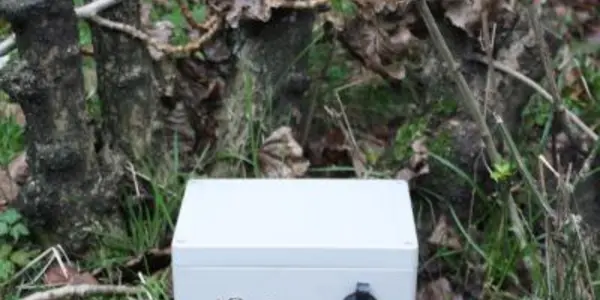
New technologies are changing the way we collect biodiversity data. What once required taking expensive, bulky and fragile equipment on field trips can now be collected on cheap, compact and robust devices.
A recent paper in the Biodiversity Data Journal on the construction of an environmental data-logger using the Arduino platform is described, in hopes that it will encourage the adoption of new data collection technologies by biodiversity scientists and foster new collaborations with both electronics hobbyists and electronics engineers who have an interest in biodiversity.

Juggling may seem like mere entertainment, but a study led by Johns Hopkins engineers used this circus skill to gather critical clues about how vision and the sense of touch help control the way humans and animals move their limbs in a repetitive way, such as in running. The findings eventually may aid in the treatment of people with neurological diseases and could lead to prosthetic limbs and robots that move more efficiently.
The study was published online recently by the Journal of Neurophysiology and will be the cover article in the journal's March 2014 print edition.
Recent research has shown an alarming number of peer-reviewed papers are irreproducible and it isn't just social sciences surveys or weak observational studies. It's in fields like biology.
This news release is available in German.
Wetlands, including peatlands, have a high content of humic substances, which are organic compounds that form during incomplete decomposition of biomass. Under anoxic conditions, soil bacteria can use these organic compounds during respiration as electron acceptors. Many organisms (including us humans) instead use oxygen as the electron acceptor.
A new University of Virginia psychology study has found that a sample of mostly white American children – as young as 7, and particularly by age 10 – report that black children feel less pain than white children.
The study, which builds on previous research on bias among adults involving pain perception, is published in the Feb. 28 issue of the British Journal of Developmental Psychology.
"Our research shows that a potentially very harmful bias in adults emerges during middle childhood, and appears to develop across childhood," said the study's lead investigator, Rebecca Dore, a Ph.D. candidate in developmental psychology at U.Va.
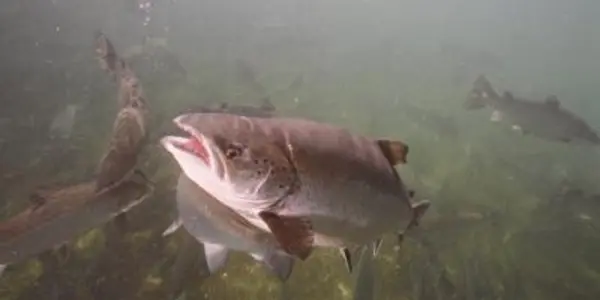
Atlantic salmon production could be boosted by a new technology that will help select the best fish for breeding.
The development will enable salmon breeders to improve the quality of their stock and its resistance to disease.
A chip loaded with hundreds of thousands of pieces of DNA – each holding a fragment of the salmon's genetic code – will allow breeders to detect fish with the best genes.
It does so by detecting variations in the genetic code of each individual fish – known as single nucleotide polymorphisms (SNPs). These variations make it possible to identify genes that are linked to desirable physical traits, such as growth or resistance to problematic diseases, for example sea lice infestations.
This news release is available in German.
Spinach looks nothing like parsley, and basil bears no resemblance to thyme. Each plant has a typical leaf shape that can differ even within the same family. The information about what shape leaves will be is stored in the DNA. According to researchers at the Max Planck Institute for Plant Breeding Research in Cologne, the hairy bittercress (Cardamine hirsuta) has a particular gene to thank for its dissected leaves. This homeobox gene inhibits cell proliferation and growth between leaflets, allowing them to separate from each other. The thale cress Arabidopsis thaliana does not have this gene. Therefore, its leaves are not dissected, but simple and entire.