Kids Helping Kids Is Universal - But Cultures Help Differently
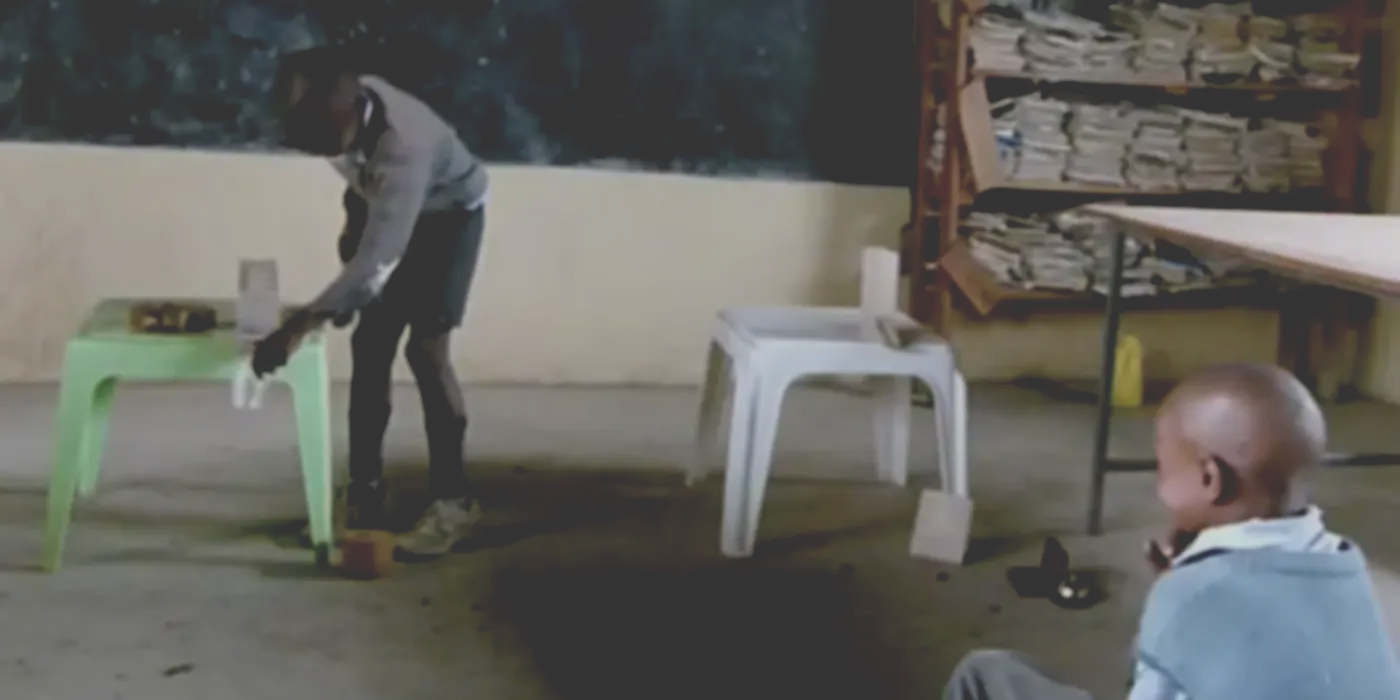
A simple game reveals a universal instinct in kids
A simple game reveals a universal instinct in kids


Periodontal disease occurs in 13 percent of humans today. Why are humans even susceptible to periodontal disease, when most animals do not get periodontal disease? Is it human behavior or something else that contributes to chronic inflammatory disease in humans?
It can't be modern living or dental hygiene. The inflammatory disease-causing bacteria has been found in a Medieval German population, by analyzing the dental calculus - plaque - from teeth preserved for 1,000 years.

The Byzantine Empire arose after the death of the Roman Emperor Constantine. To make the empire more manageable, it was split into eastern and western halves, with Rome as the seat of the west and Constantinople as the capitol of the east. Unlike Rome of the time, the Byzantine Empire coupled military might and the religious authority of the Church.When the Roman Empire collapsed and led Europe into the Dark Ages, the Byzantine Empire continued on and it continued to modernize. You don't last for a thousand years, including holding off Muslim invaders for much of that time, without doing some things right. They finally collapsed in 1453, when Constantinople was captured by Turks. It is known as Istanbul today.

A new study finds that bacterial movement is impeded in flowing water, enhancing the likelihood that the microbes will attach to surfaces, which sheds some new light on how infections take hold in medical devices.The findings were the result of microscopic analysis of bacteria inside microfluidic devices and combined experimental observations with mathematical modeling. The study showed that the flow of liquid can have two significant effects on microbes: “It quenches the ability of microbes to chase food,” says co-author Roman Stocker, an assitant professor of civil engineering at MIT, “and it helps microbes find surfaces.”

Zircon crystals from Western Australia's Jack Hills region crystallized 4.4 billion years ago, building on earlier studies that used lead isotopes to date Australian zircons and identify them as the oldest bits of the Earth's crust. The microscopic zircon crystal is now confirmed to be the oldest known material of any kind formed on Earth.
A new study strengthens the theory of a "cool early Earth," where temperatures were low enough for liquid water, oceans and a hydrosphere not long after the planet's crust congealed from a sea of molten rock. The study reinforces the belief that Earth had a hydrosphere before 4.3 billion years ago and possibly life not long afte.

The upside to global warming might be milder winters. This would naturally lead to fewer deaths to due cold but an analysis of data from the past 60 years shows that is not likely.
Polio is an incurable, crippling, contagious and possibly fatal viral disease. The United States last experienced a polio epidemic in the 1950s, before a vaccine was introduced.
Today, it has been eradicated from most of the planet, but a polio-like syndrome has been found in a cluster of children from California over a one-year period, according to a case report released today.

Can diet give you a better memory?
It seems to, at least when it comes to an animal cognition test using lemurs. A study of five lemur species found that fruit-eatershad better spatial memory than lemurs with a more varied diet. The researchers conclude that relying on foods that are seasonally available and far-flung gives a competitive edge to individuals with certain cognitive abilities - such as remembering where the food is.

The Interface Region Imaging Spectrometer (IRIS) mission studies the chromosphere, that layer of the sun's atmosphere that is key to regulating the flow of energy and material as they travel from the sun's surface out into space.
Along the way, the energy heats up the upper atmosphere, the corona, and sometimes powers solar events such as this flare. IRIS is equipped with a spectrograph that can separate out the light it sees into its individual wavelengths, which in turn correlates to material at different temperatures, velocities and densities.
Rule breakers are often more creative, because they are not bound by conventional ideas. So are liars.
Yet one of those has a positive connotation and one is negative. But lying about performance on one task increased creativity on a subsequent task, by making people feel less bound by conventional rules, finds a paper in Psychological Science.
To examine the link between dishonesty and creativity,
lead researcher Francesca Gino of Harvard Business School
and colleague Scott Wiltermuth of the Marshall School of Business at the University of Southern California designed a series of experiments that allowed, and even sometimes encouraged, people to cheat.

Microseconds after the big ban happened the universe was a superhot, superdense primordial soup of “quarks” and “gluons,” particles of matter and carriers of force. The quark-gluon plasma cooled almost instantly but it set the stage for the universe we know today and to better understand how the universe evolved, a quark-gluon plasma is being reproduced in giant particle accelerators like the Relativistic Heavy Ion Collider (RHIC) at Brookhaven National Laboratory (BNL), where the Solenoidal Tracker at RHIC ("STAR") experiment has been collecting and analyzing data for the past decade.

In 2011, a tsunami hit Japan. While the damage to a nuclear power plant got all of the media attention, with activists claiming mutant pregnancies in California a short while later, the environmental damage caused by the tsunami itself should be more of a concern.
The amount of debris in the ocean is growing exponentially and the driftage generated by the 2011 tsunami gave scientists Nikolai Maximenko and Jan Hafner a unique chance to learn about the effects of the ocean and wind on floating materials as they move across the North Pacific Ocean.
Are you worried you are losing your memory and wonder if you might have Alzheimer's coming?
You have a good chance of being correct. Self-reported memory complaints predict clinical memory impairment later in life rather well, according to a new paper. Erin Abner, Ph.D, an assistant professor at the University of Kentucky's Sanders-Brown Center on Aging, asked 3,701 men aged 60 and older a simple question: "Have you noticed any change in your memory since you last came in?"
That answers told a rather accurate medical tale. "It seems that subjective memory complaint can be predictive of clinical memory impairment," Abner said. "Other epidemiologists have seen similar results, which is encouraging, since it means we might really be on to something."