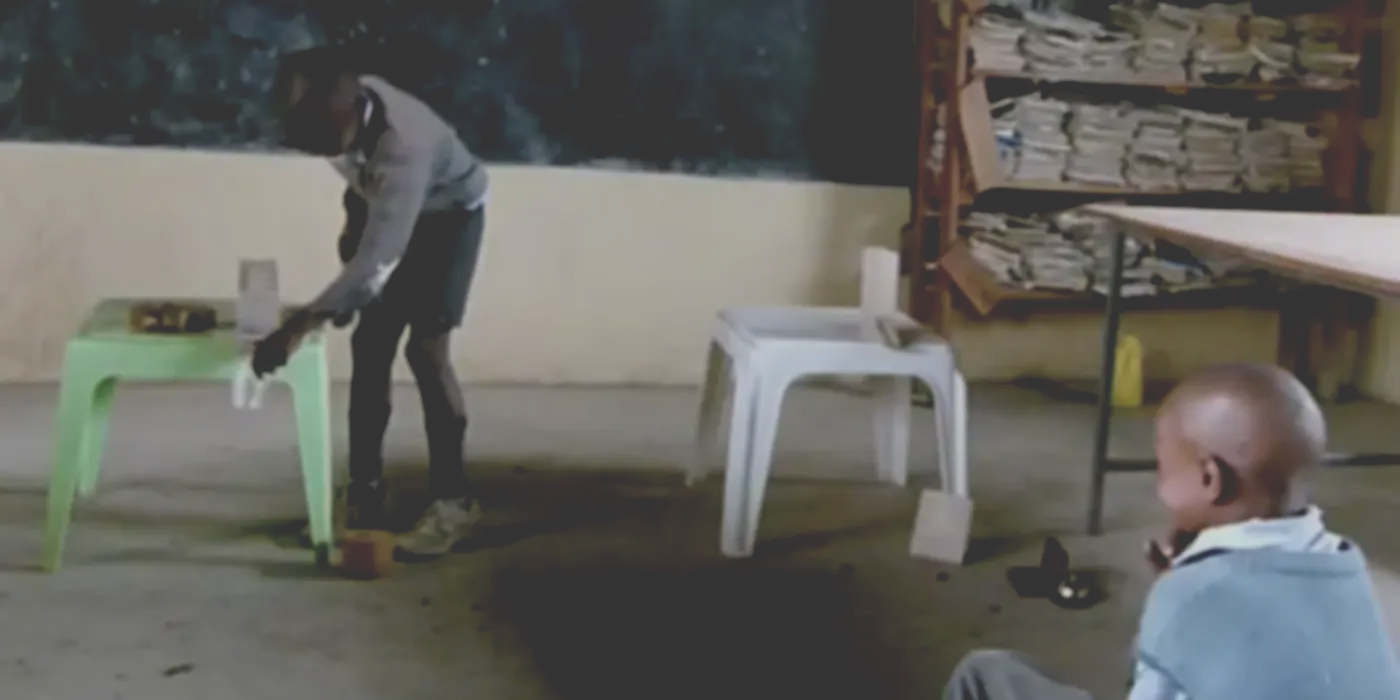
Kids Helping Kids Is Universal - But Cultures Help Differently
A simple game reveals a universal instinct in kids
A simple game reveals a universal instinct in kids


If you want to turn down the emotional intensity before making an important decision, turn down the lights, say Alison Jing Xu, assistant professor of management at the University of Toronto Scarborough, and Aparna Labroo of Northwestern University.

Researchers have created an adult stem cell based method for restoring strength to damaged skeletal muscles in the elderly.
Skeletal muscles are some of the most important muscles in the body, supporting functions such as sitting, standing, blinking and swallowing. In aging individuals, the function of these muscles significantly decreases. People lose fifteen percent of muscle mass every single year after the age of 75, a trend that is irreversible.
Through tracing the signaling pathways of the cells, the researchers determined that during aging, a subpopulation of stem cells begin to express a modification of a protein that inhibits their ability to grow and make new stem cells.

In the 'sometimes what you don't find can be important too' department, a new high-accuracy calibration of the LUX (Large Underground Xenon) dark matter detector's sensitivity to ultra-low energy events strongly confirms the result that it did not find low-mass dark matter particles last summer during its initial run.
Survey results related to how men approach old age found that happiness remains relatively stable for some 80 percent of the population, but perceptions of unhappiness – or dealing with "hassles" – tends to get worse once you are about 65-70 years old.
The reasons vary, researchers say, but may be because of health issues, cognitive decline or the loss of a spouse or friends.

Twice in recent history, the periodic El Niño event has caused sea level drops abruptly in the tropical western Pacific. The tides remain below normal for up to a year in the South Pacific, especially around Samoa, and Samoans call the resulting wet stench of coral die-offs arising from the low sea levels "taimasa" (pronounced [kai' ma'sa]).
A team of scientists at the International Pacific Research Center, University of Hawai'i at Mānoa and at the University of New South Wales, Australia is studying the climate effects of this particular variation of El Niño.

In 1964, the physicist John Bell tackled locality and the disparity between classical physics and quantum mechanics, stating that if the universe is based on classical physics, the measurement of one entangled particle should not affect the measurement of the other.

Politics always make strange bedfellows. When George W. Bush was president, the claim of his political opposition was that Iraq was 'no harm to anyone outside its own borders' and so we should not be involved there, much less do any nation building. Yet when his political opposition gained control of the White House, the calls to do that same thing in Libya, Egypt, Syria and other places have been quite vocal. They just rationalized that they were helping an Arab Spring to flourish by removing the military power of despots.

Calling Bill Haley and the Comets, because PSR J0738-4042, which lies 37,000 light-years from Earth in the constellation of Puppis, is being rocked around the clock.
As in being constantly hit by asteroids.
It's not a great place. The environment around this star is especially harsh, full of radiation and violent winds of particles, say the researchers who used telescopes in South Africa and Australia to find the assaults.
"One of these rocks seems to have had a mass of about a billion tonnes," saidAustralian Commonwealth Scientific and Industrial Research Organisation's (CSIRO) astronomer and member of the research team Dr. Ryan Shannon. "If a large rocky object can form here, planets could form around any star. That's exciting."

Jazz musicians do a lot of spontaneous, improvisational music and brains scans show robust activation of brain areas traditionally associated with spoken language and syntax, which are used to interpret the structure of phrases and sentences.
But this musical conversation shut down brain areas linked to semantics — those that process the meaning of spoken language, according to results of a new study by Johns Hopkins researchers which used functional magnetic resonance imaging (fMRI) to track the brain activity of jazz musicians in the act of "trading fours," a process in which musicians participate in spontaneous back and forth instrumental exchanges, usually four bars in duration.

Call it the buoyancy of the brood.
When facing a flood, ants build rafts and find other ways to minimize injury or death - they can basically use the brood to act as a life preserver - according to a new paper. The queen ant goes in the middle and is protected on all sides by the rafting ants.
Why are some people are unable to break free of their delusions, despite overwhelming evidence explaining the delusion isn't real?
A new paper by a philosopher offers as good an explanation as any, that dreams and delusions have a common link – they are associated with faulty "reality testing" in the brain's higher order cognitive systems.
Chronic pain diagnoses are easy to obtain. Because it is symptom-based medicine and a subjective ailment, it's difficult to say what is real and what isn't.
In cases where the ailment is psychological, the treatment is also, and a new review paper finds that psychological interventions provide more relief than prescription drugs or surgery, though they are used much less frequently than traditional medical. According to the paper, almost half of American adults suffer from chronic pain, and who are you to tell anyone they are not in pain?