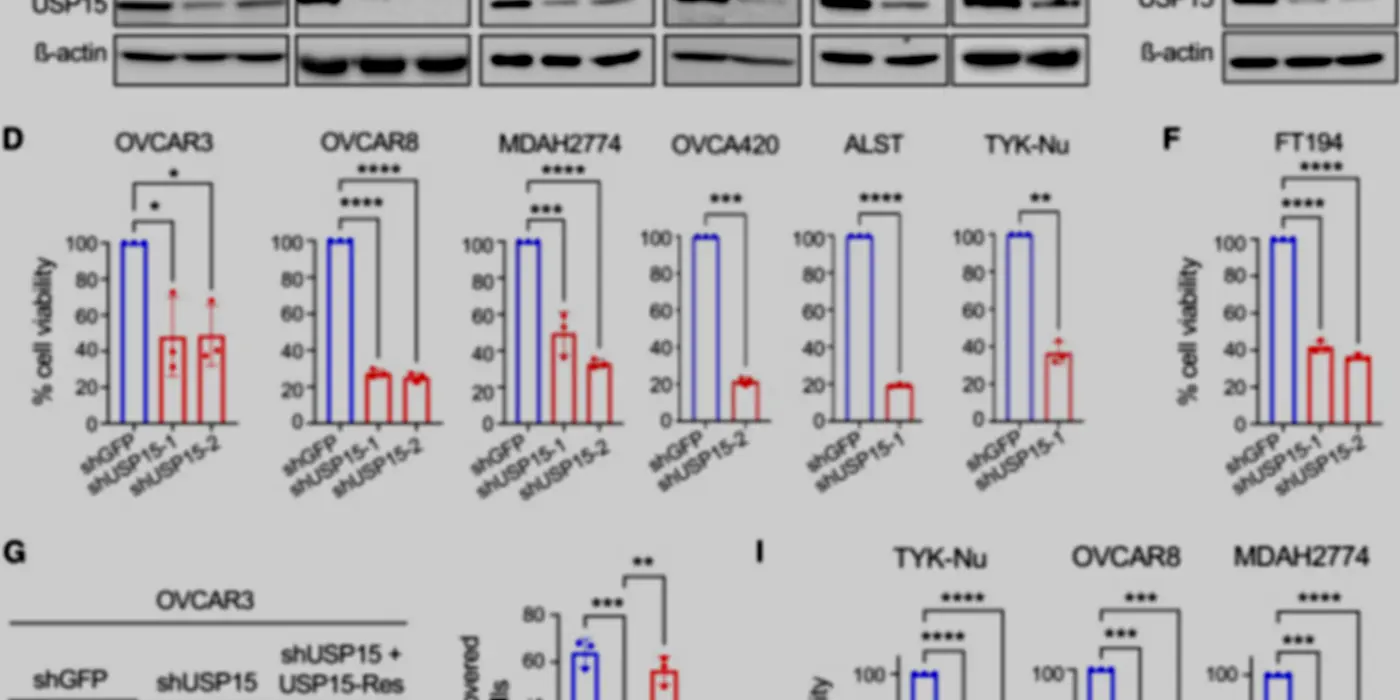
Enzyme USP15 Limits Ovarian Cancer Cells And Boosts Chemotherapy
Ovarian cancer is devastating, five-year survival rate under 30%, when detected after it has spread. New basic research may improve that.
Ovarian cancer is devastating, five-year survival rate under 30%, when detected after it has spread. New basic research may improve that.


How many times have you had some pithy comment in prose be misinterpreted when you just know that if the other people could simply hear your voice or see your face they would know how brilliant you are?It happens a lot and emoticons, along with their evil cousin ALL CAPITALIZATION AND !!! PUNCTUATION, were invented to try and close the communications gap. Now European researchers at the PASION project have developed a suite of tools to add non-verbal cues to email, phone calls, chats and other channels of electronic communication. Digital communication hasn’t the richness of face-to-face conversation because it cannot communicate the non-verbal cues and contextual information that are so important to us all.
Women get more knee injuries than men and new research from the Faculty of Kinesiology at the University of Calgary say there may be a connection between the laxity of a woman's knee joint and her monthly hormone cycle.The research project — a collaboration between kinesiology, engineering and health sciences researchers — has found that not all woman experience knee laxity at the same time of their menst rual cycle. The researchers speculate that this is likely why previous research in the area has largely discounted a connection between the hormone cycle and knee injury.
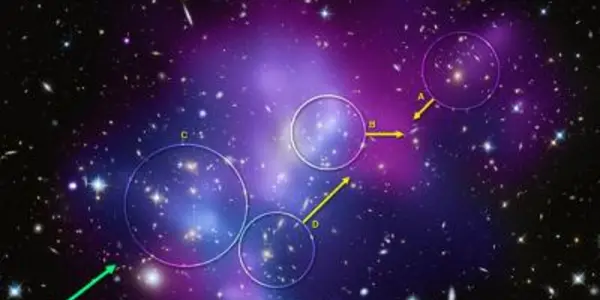
The most crowded collision of galaxy clusters has been identified by combining information from three different telescopes. This result gives scientists a chance to learn what happens when some of the largest objects in the Universe go at each other in a cosmic free-for-all.Using data from NASA's Chandra X-ray Observatory, Hubble Space Telescope and the Keck Observatory on Mauna Kea, Hawaii, astronomers were able to determine the three-dimensional geometry and motion in the system MACSJ0717.5+3745 (or MACSJ0717 for short) located about 5.4 billion light years from Earth.
What's different about nocturnal mammals that have 'night vision'? According to a Cell report, the DNA within the photoreceptor rod cells responsible for low light vision is packaged in a very unconventional way. That special DNA architecture turns the rod cell nuclei themselves into tiny light-collecting lenses, with millions of them in every nocturnal eye.
There's a perception among some that it's a man's world and they get all the attention. If you've ever been in a bar or a library or a baseball game, you know this is not true - have a woman drop a napkin and see what happens whereas a man could be bleeding out his eyes and be unnoticed. But women want to keep men on their toes by pretending they are in charge.Now the gig may be up, thanks to biology. University of California, Berkeley biologist Doris Bachtrog and her colleagues say that the history of the X chromosome offers important clues to the origins and benefits of sexual reproduction. X even compensates for the degeneration of Y, which will get people talking.Take that, much-studied male-determining Y chromosome.

What? NASA wants to make Earth Day about space?Not at all, NASA is instead asking the public to vote for the most important contribution the space agency has made to exploring and understanding Earth and improving the way we live on our home planet. That's right, they call this our home planet, which means there may be a vacation planet on the way. That's thinking big, people.
Combating several human pathogens, including some biological warfare agents, may one day become a bit easier thanks to research reported by a University of Iowa chemist and his colleagues in the April 16 issue of the journal Nature.Amnon Kohen, associate professor of chemistry in the UI College of Liberal Arts and Sciences, said that the study indicated a new mechanism by which certain organisms manufacture the DNA base thymidylate. This new mechanism is so very different from the way humans synthesize this base that drugs targeting this biosynthetic path in the pathogens are unlikely to affect the human path, thus resulting in very reduced side effects or no side effects at all.

An unmapped reservoir of briny liquid chemically similar to sea water, but buried under an inland Antarctic glacier, appears to support unusual microbial life in a place where cold, darkness and lack of oxygen would previously have led scientists to believe nothing could survive, according to newly published research.After sampling and analyzing the outflow from below the Taylor Glacier, an outlet glacier of the East Antarctic Ice Sheet in the otherwise ice-free McMurdo Dry Valleys of Antarctica, researchers believe that, lacking enough light to make food through photosynthesis, the microbes have adapted over the past 1.5 million years to manipulate sulfur and iron compounds to survive.
Scientists have found an ancient ecosystem below an Antarctic glacier and learned that it survived millions of years by transforming sulfur and iron compounds for growth.
New research provides insight into how the brain can execute different actions in response to the same stimulus. The study, published by Cell Press in the April 16 issue of the journal Neuron, suggests that information from single brain cells cannot be interpreted differently within a short time period, a finding that is important for understanding both normal cognition and psychiatric disorders.

If we're going to get a $300 genome sequence any time in the near future, around the cost it will take to have it as part of routine medical care, the process has to get faster.The obstacles to reaching that goal have been primarily technological: Scientists have struggled to figure out how to accurately read the 3 billion base pairs - the amount of DNA found in humans and other mammals - using current time-consuming and inefficient methods.
Genetic differences can influence one's risk of developing proteinuria, a condition that increases the risk of cardiovascular disease and chronic kidney disease (CKD), according to a study appearing in an upcoming issue of the Journal of the American Society of Nephrology (JASN). The results may be important for determining patients' health risks and for devising new medical treatments.Approximately 12% of people in the United States have proteinuria (abnormal levels of protein lost in the urine), and African Americans and American Indians have higher risks of developing the condition than other groups. Researchers suspect that genetic variation likely accounts for part of their increased risks.