More on Radiacode 110
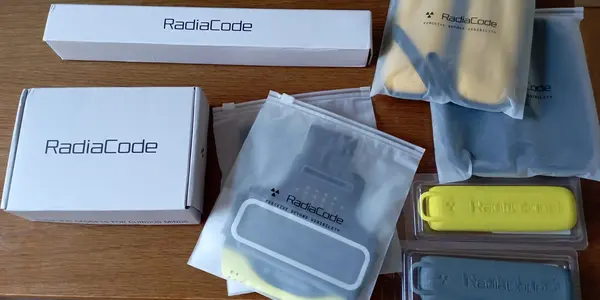
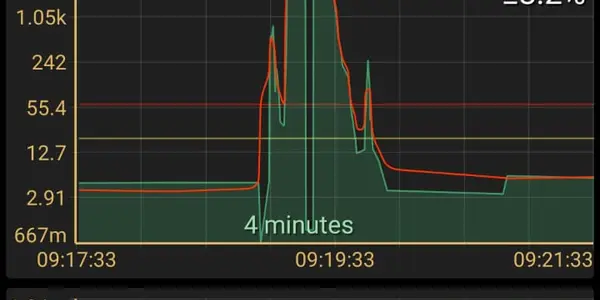
This is the second post reporting a few tests of the Radiacode 110 spectrometer, an extra-cool pocket dosimeter/radiation counter/spectrograph sold by RadiaCode.
This is the second post reporting a few tests of the Radiacode 110 spectrometer, an extra-cool pocket dosimeter/radiation counter/spectrograph sold by RadiaCode.

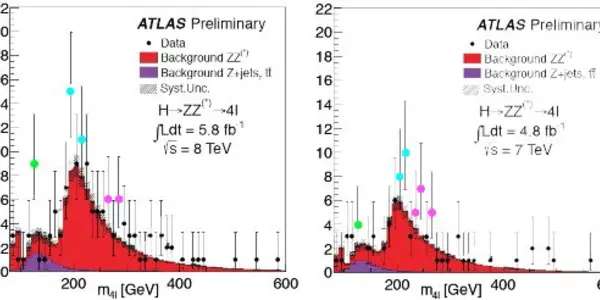
As I explained yesterday, I am in the process of receiving payment for a few bets on possible discoveries at the LHC. Two such bets were on between me and Tony Smith, a long time reader of this blog and a lawyer with deep interest in particle physics (and a few interesting ideas). Tony now concedes them. These are for a total of $200 and a bottle of Strega (an italian liquor); the latter has been agreed to be turned into a bottle of good wine, much closer to my taste. I will post here a picture of the wine as I get it; in the meantime, Tony agreed to write something to describe the heart of the matter to readers of this blog. So the text below is from him.LEARNING FROM LOSING

Sense About Science, the British charitable trust that tries to educate the community on the correct handling of scientific claims, and to "work in partnership with scientific bodies, research publishers, policy makers, the public and the media, to change public discussions about science and evidence", has produced today a very interesting booklet on peer review.
The path of the LHC experiments to the successful observation of a Higgs boson has not been the smoothest I could think of, with delays in construction, incidents, and the like; but we are finally there. And now, with over 10/fb of data fully analyzed and presented at ICHEP, we can take stock and draw the "summer 2012" picture on existing and non-existing subnuclear entities, the non-existing ones notably including SUSY particles and other new physics candidates which are periodically evoked by theorists to mend the shortcomings of the standard model.
Okay, so after the wondeful announcement of two days ago, we have the rest of our life to take stock. But we need not wait until we get old, so let me begin today by listing some "ex post" thoughts related to the Higgs hunt and discovery. I imagine I will have more thoughts as this thing cools off, but here is something to start with.
Yesterday the Italian newspaper "Il Manifesto" featured two pieces written by yours truly on the discovery of the Higgs boson. I was delighted to have a chance to write for that newspaper, which has an illustrious history and is totally independent (and on the verge of being shut down). By the way, I must thank Peter Woit who suggested the reporters of the newspaper to contact me for the piece.The articles are in Italian, but I can make an effort at translating them for you here.
Rolf is drawing the conclusions. He just asked the audience:"I think we have it. Do you agree ?" And a roar of consensus fills the auditorium.The slide says "The observation of a new particle consistent with a Higgs boson".It is a historic milestone, but only the beginning.A standing ovation follows. Then a connection with Melbourne, with the other auditorium applauding. Now questions in the CERN site ensuing.Theorists take the stage, Higgs saying it is an extraordinary achievement for the lab, and that he is glad that it happened in his lifetime.A very moving finale !
[ The previous entries of this live blogging series are available here (part 1) , here (part 2) , here (part 3) , here (part 4), and
[ The first three entries of this live blogging series are available here (part 1) and here (part 2) and here (part 3) and here (part 4) and
[ The first three entries of this live blogging series are available here (part 1) and here (part 2) and here (part 3) and here (part 4)].
[ The first three entries of this live blogging series are available here (part 1) and here (part 2) and here (part 3)]
[ The first two entries of this live blogging series are available here (part 1) and here (part 2) ]
This is the second post of a series of blogs that I am writing this morning, July 4th, to describe the ongoing happenings at CERN, where at 9AM the Higgs boson Observation will be announced by the ATLAS and CMS collaborations. Please reload this page at 10 minute intervals if you want to hear the latest news, or see the previous entries.Entry 1 - Where's the queue ?