More on Radiacode 110
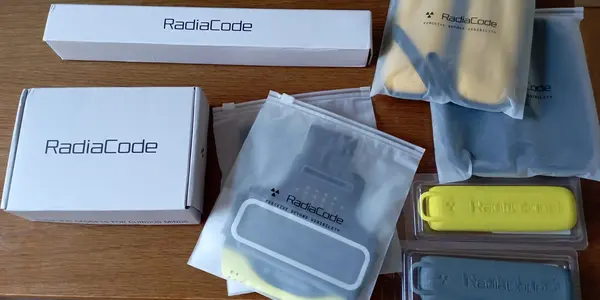
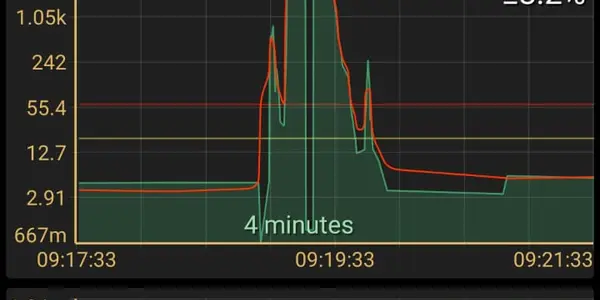
This is the second post reporting a few tests of the Radiacode 110 spectrometer, an extra-cool pocket dosimeter/radiation counter/spectrograph sold by RadiaCode.
This is the second post reporting a few tests of the Radiacode 110 spectrometer, an extra-cool pocket dosimeter/radiation counter/spectrograph sold by RadiaCode.

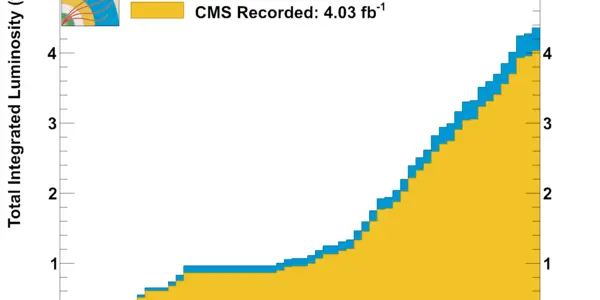
The LHC collider has been producing proton-proton collisions at a centre-of-mass energy of 8 TeV for two months now, and the integrated luminosity collected by the CMS experiment has surpassed the mark of 4 inverse femtobarns (see figure below). That's already about 80% of the total bounty of 2011!

For the second and last time this century, the planet Venus will pass over the visible disk of our Sun for observers located in the Americas (in the evening of June 5th) and western Europe (in the morning of June 6th). The event has a noteworthy scientific value -particularly for exoplanetary searches-, but it is also quite spectacular to observe, if you have some modest equipment (but you should be able to spot it with your naked eye, provided you only look through a thick-smoked glass; never look at the Sun directly!). The added value is that probably none of us will be around the next time this event occurs, in 2117.

Dear readers, your input is appreciated. Please read the following quotes and let me know what are your thoughts on the matter in the comments thread. You need not leave your name if you wish to remain anonymous, but I'd appreciate it if you mentioned your degree of education and whether you are/were/will be a scientist.Quote 1:
Measuring the value and the impact of a scientist on her field of research using as data her scientific papers, the number of citations these papers got, and the prestige of the scientific journals where these were published is no easy matter. Grading Researchers: The H-IndexThere is a large body of literature on how best to account for all these factors together: the discipline is called "scientometrics". Of course, the goal is to summarize the productivity of a scholar in a single number; possibly one with at most double digits, since decision-makers who hire or fund are usually incapable of handling more complex data. One notable attempt is the Hirsch Index, proposed in 2005 by a physicist, Jorge Hirsch.
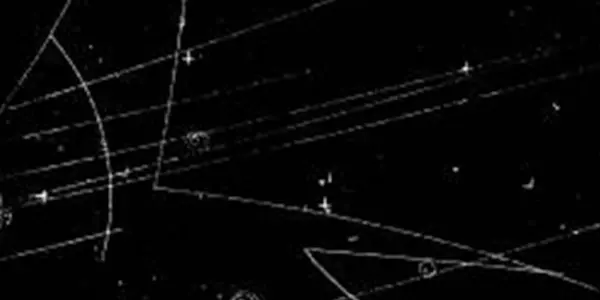
Top quarks are most often produced in pairs at hadron colliders. The reason of this fact is that the strong interaction, which produces most of the reactions between the projectiles, is flavor-blind, and it cannot create a single new flavor of quarks out of nothing. In other words, physical processes mediated by strong interactions conserve the quantum numbers describing the difference between the number of quarks and antiquarks of any given kind: U, D, C, S, T, and B.
In this sorry age for Supersymmetry (SUSY) phenomenologists, it is quite easy to step on an aching toe while discussing the results of the Large Hadron Collider experiments, whose results have let these physicists down by excluding the presence of SUSY where most of them used to put their moneys until yesterday.
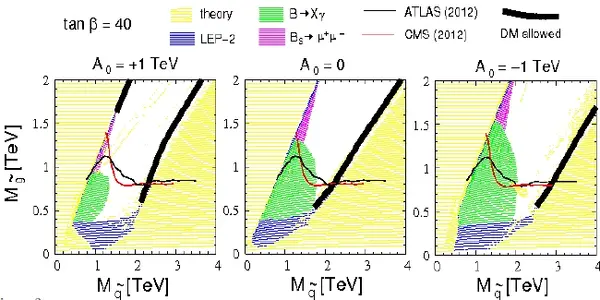
Today I read with pleasure a paper on Supersymmetry which is surprisingly well written and clear. I can only warmly advise anybody seriously interested in the phenomenology of SUSY (in particular, the version called "constrained minimal supersymmetric extension of the Standard Model", cMSSM for friends) to give it a close look.The cMSSM is a very attractive "minimal" option to extend the Standard Model with a minimal addition of parameters (still, quite a few, as in any Supersymmetric theory). Its appeal lies in the fact that one may basically study the resulting predicted phenomenology by just investigating five crucial parameters.
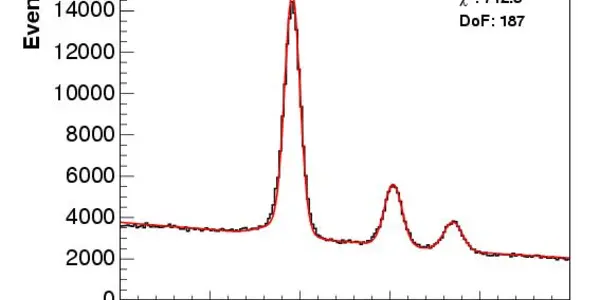
The family of Upsilon resonances is among the few things that can always cheer me up and remind me about my fascination for elementary particles when I get bored about my job. The sight of their mass peaks implies that heavy quarks bind together exactly as electrons and positrons do, orbiting around one another for a brief instant of time. An impossibly brief one, and yet quite long for subnuclear standards. It is always a refreshing and inspiring sight (below, see the three lowest-lying Upsilon states as they are seen by the CDF experiment at the Fermilab Tevatron collider, in a sizable fraction of their Run II data: lovely, aren't they ?).
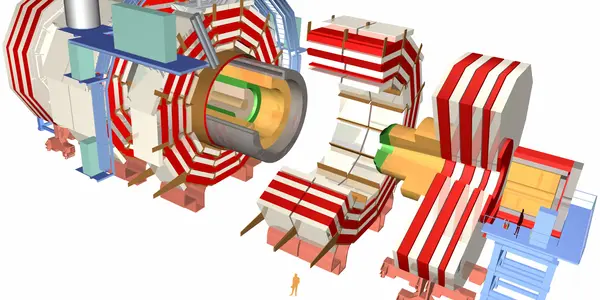
This week's graph comes from a recent publication by the CMS experiment, the one I am a proud member of together with about 3000 colleagues from all over the world.
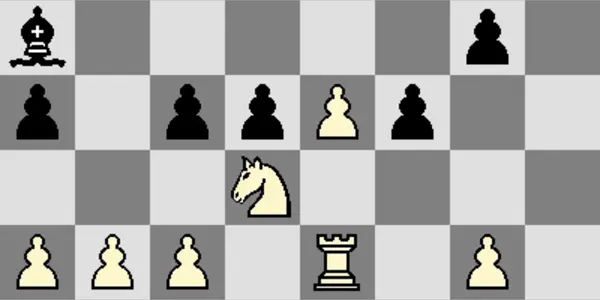
To the couple of positions I posted yesterday from the Chess Tournament I played this weekend, let me add one I played on round II, when I was white against Fausto Scali, the blind player. The position arose from the Advance variation of the French defense (1.e4 e6 2.d4 d5 3.e5), which however we reached with a transposed move-order (1.e4 c5 2.c3 d5 3.e5). In the position below, black has just played an inaccuracy in an already slightly worse queenless middlegame:
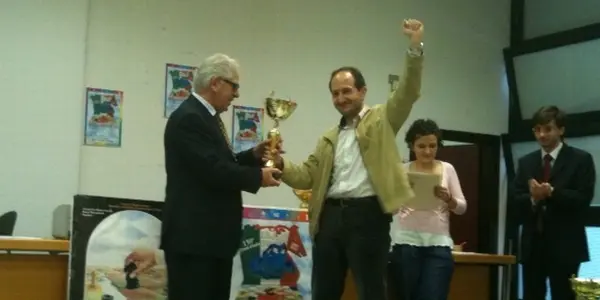
Chess is a game, a sport, and a very radical way to test one's concentration and discipline in pure thought. Besides liking it as a game (a precondition to enjoy the other benefits), I also enjoy immensely the demands that a chess game puts on your brain's functioning; and this is brought to the extreme during a chess tournament, where you are also subject to pressure from competition factors extraneous to the 64 squares where the battles develop.
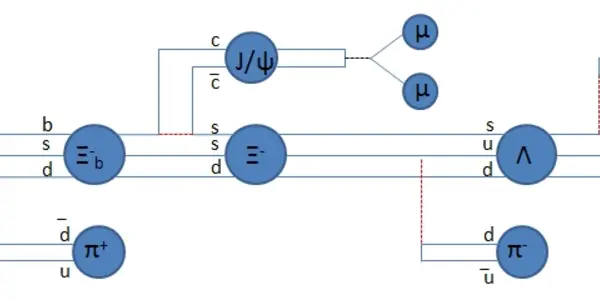
No, unfortunately not yet the discovery of the century. Still, the new particle found by CMS in its 2011 dataset is a very important piece of the puzzle of low-energy spectroscopy. Here "low" should be taken with a pinch of salt: the new particle, an excited state of the Ξ_b series, has a mass only slightly lower than six GeV, and is thus "heavy" if compared to most other hadrons.