More on Radiacode 110
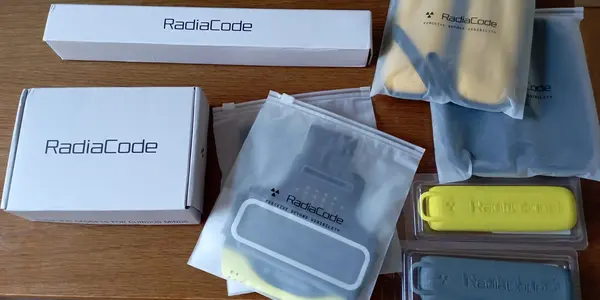
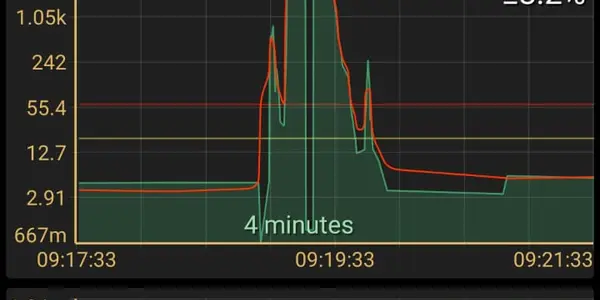
This is the second post reporting a few tests of the Radiacode 110 spectrometer, an extra-cool pocket dosimeter/radiation counter/spectrograph sold by RadiaCode.
This is the second post reporting a few tests of the Radiacode 110 spectrometer, an extra-cool pocket dosimeter/radiation counter/spectrograph sold by RadiaCode.

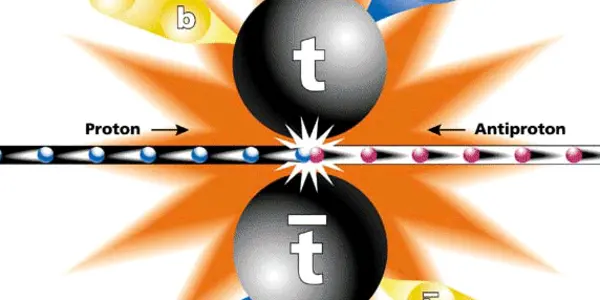
A new result by the CMS collaboration has been produced today on top quark physics. For those of you who only get triggered by the search of new particles or new forces, the study of "yesterday's signals", such as top quarks, is boring and uninformative; but high-energy physics is a rich field of research, and we extend our understanding of subnuclear physics no less by getting to know how exactly top quarks get produced in proton-proton collisions, than we do by placing limits on ephemeral particles (SUSY ones, e.g.).So I salute the new measurement as an important advance. Using over one inverse femtobarn of data collected in 2011 (about a hundred trillion proton-proton collisions), CMS was able to study top quark pairs in great detail.
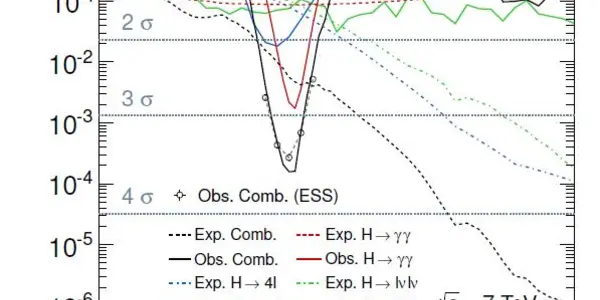
You have seen it already two months ago, but those were "preliminary" results. Now both CMS and ATLAS have produced full-fledged documents (CMS here, ATLAS here) describing their respective combinations of different Higgs boson searches, using data collected in 2011 by the two experimental apparata at the CERN Large Hadron Collider.
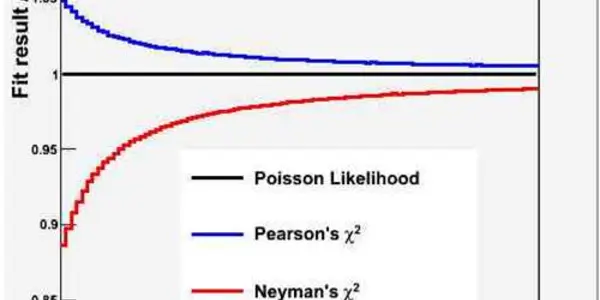
Last week I spent a few interesting days in the pleasant winter setting of Engelberg, a mountain location in the Swiss alps. There I attended the CHIPP 2012 winter school, an event organized by Vincenzo Chiochia from University of Zurich and Gabriella Pazstor from University of Geneva. They invited me to give a three-hour mini-course in Statistics for data analysis in High-Energy Physics, something which was a new experience for me. It took me the best part of the last couple of months to get prepared, but I was glad I did. In the end, the material I put together could have been used profitfully for five or six hours of lecture, but by skipping some of the topics I could get to the end without using a silly speed.
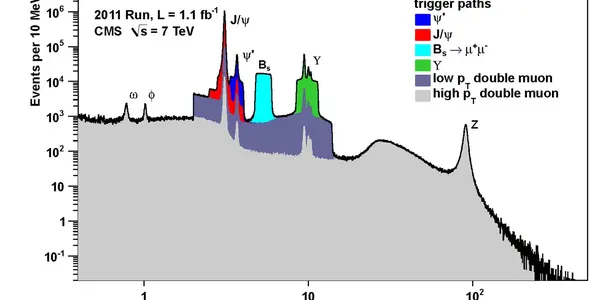
The CMS Collaboration has just released the results of a deep study of their sample of lead-lead collisions, produced at a center-of-mass energy of 2.76 TeV per nucleon by the Large Hadron Collider.

This week's edition of the CMS Times features a short piece by A.Rao, where some points are made on the issue of correct statistical analysis of high-energy physics data.
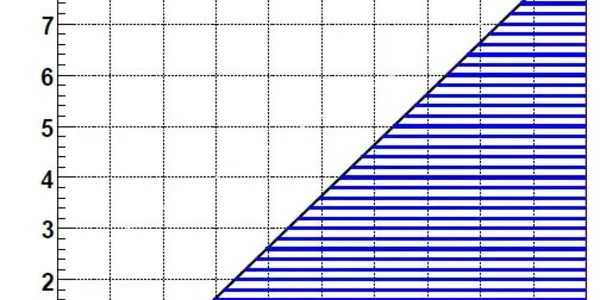
...and people who like sausages, should not ask how they are made.As a member of two large scientific collaborations (CDF and CMS), I enjoy the benefit of seeing lots of scientific publications that carry my name as an author being produced at weekly rates. This is however also a burden, since I at the very least must try to ensure that I like the way the results are produced. I.e., that I agree with the details of how these scientific measurements are made.
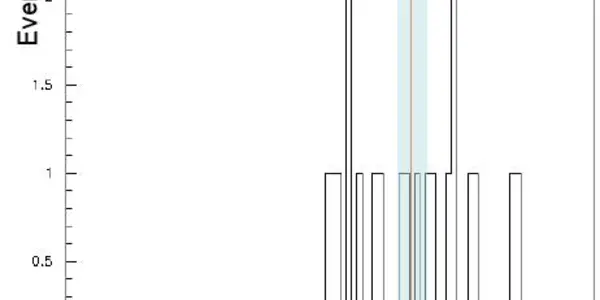
Update: I have modified the title of this post [originally: "Opera's Statistical Booboo"] and the text below (in places I marked accordingly) upon realizing, thanks to a very good point raised by a reader in the comments thread below, that the idealization I was making of the measurement described below made my conclusions too hasty. Read the text to the end if you want more detail.
A blog is by nature a place where things move on fast. Articles disappear beyond the horizon in the matter of a week or two, and only rarely get resuscitated by a later article linking them back from oblivion. At Science 2.0 things are no better than in any other blog sites, with the aggravating feature that there is no "archive" button, nor a "random post" feature. Since I believe that many of my articles are not very connected to the specific time at which they have been written, I have in mind to reorganize the material somehow, when I have the time. However, this looks like a grievious task, since the number of posts I have written here is about 500.
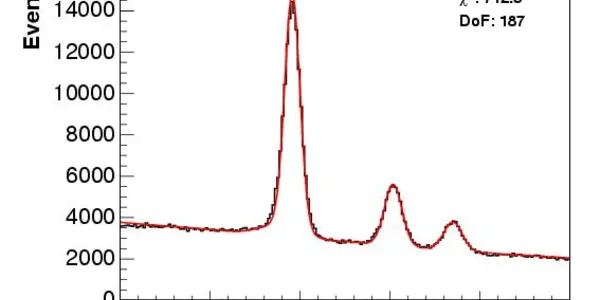
Just as you thought it was over for 2011, and you proceeded to hung the Higgs mass plots on the christmas tree as a wish for stronger signals next year, ATLAS comes out with a new particle discovery. That's what I like of particle physics - there's always so much going on that the excitement is never really over.
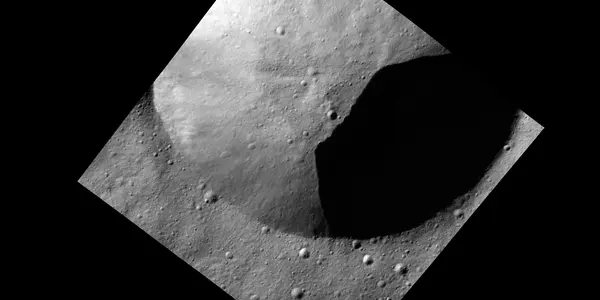
NASA is featuring the first high-resolution images of asteroid Vesta as taken by the DAWN spacecraft during a low-altitude orbit. The images show a very interesting surface, battered with old and more recent craters, plus "textures such as small grooves and lineaments that are reminiscent of the structures seen in low-resolution data from the higher-altitude orbits. Also, this fine scale highlights small outcrops of bright and dark material." (from the NASA piece).
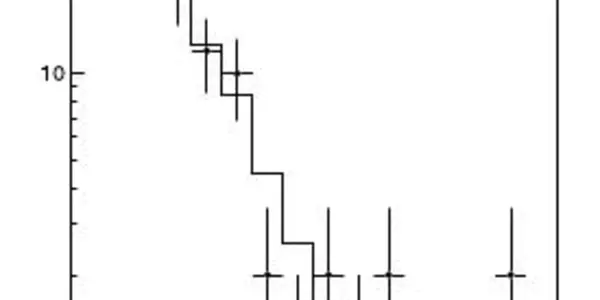
Have you ever looked at a histogram with the data displayed as counts per bin in the form of points with error bars, and wondered whether those fluctuations and departures from the underlying hypothesized model (usually overimposed as a continuous line or histogram) were really significant or worth ignoring ?
Have you ever looked at a histogram with the data displayed as counts per bin in the form of points with error bars, and wondered whether those fluctuations and departures from the underlying hypothesized model (usually overimposed as a continuous line or histogram) were really significant or worth ignoring ?