More on Radiacode 110
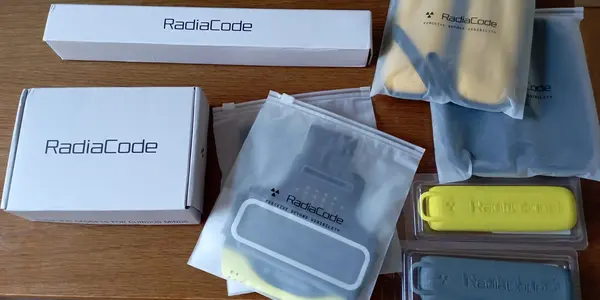
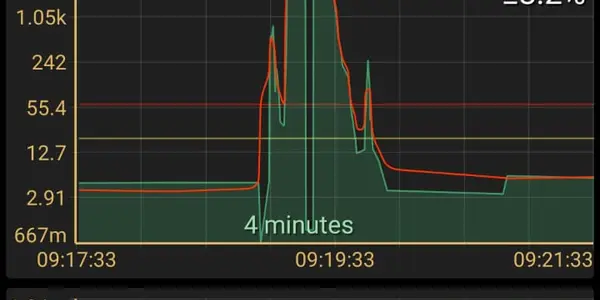
This is the second post reporting a few tests of the Radiacode 110 spectrometer, an extra-cool pocket dosimeter/radiation counter/spectrograph sold by RadiaCode.
This is the second post reporting a few tests of the Radiacode 110 spectrometer, an extra-cool pocket dosimeter/radiation counter/spectrograph sold by RadiaCode.

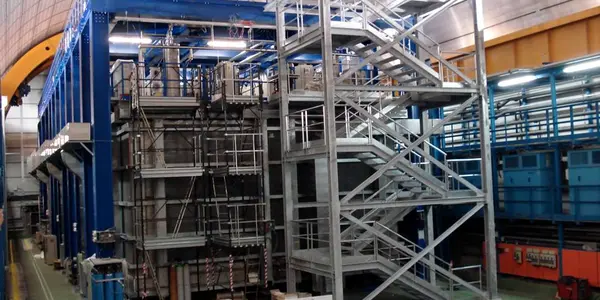
The saga of the superluminal neutrinos took a dramatic turn today, with the publication of a very simple yet definitive study by ICARUS, another neutrino experiment at the Gran Sasso Laboratories, who has looked at the neutrinos shot from CERN since 2010.
The saga of the superluminal neutrinos took a dramatic turn today, with the publication of a very simple yet definitive study by ICARUS, another neutrino experiment at the Gran Sasso Laboratories, who has looked at the neutrinos shot from CERN since 2010.
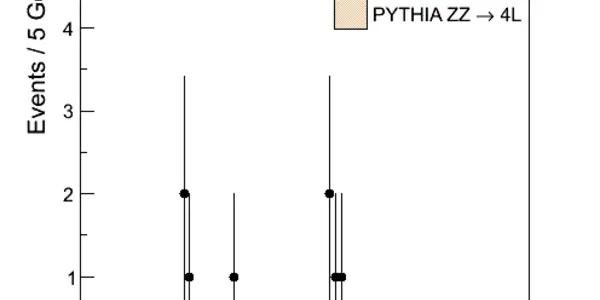
Higgs boson hunters often catch themselves dreaming of the boson having a mass high enough to give rise to the spectacular decay into two Z bosons, and then four charged leptons in the final state. At a hadron collider -let's talk of the LHC to be specific- such a signature is the only one providing events which, once properly selected, are more likely signal than background. The situation of observing an event display being able to tell for sure what it represents, among the infinite possibilities and the intrinsic indetermination of quantum processes, is reassuring and gives a physicist a feeling of power. God did not play dice this time: those two are 100% Z bosons, and their combined mass is exactly the one of the Higgs.

I read with interest and some amusement (on the mouse joke) the piece written here by Sascha Vongehr. I find his arguments wrong and decided to answer him in the comments thread of his post, but my answer got a bit too long and I did not want to hijack a nice discussion that was developing there; plus I found out that what I was writing could be suitable for this blog in its own right. So below I explain what I criticize about his arguments.
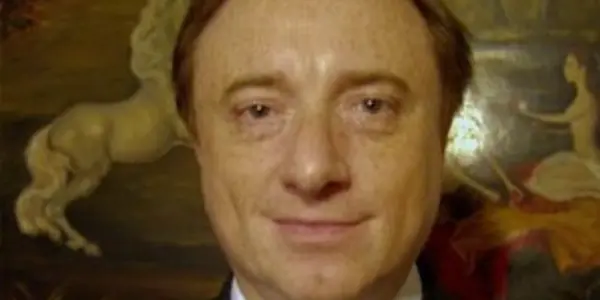
Fabrizio Tamburini (left) is an old friend - I have known him since 1976, when we both used to attend the gatherings of the newborn Associazione Astrofili Veneziani, at the Lido of Venice. The love for astronomy had brought us together, but we took different paths in our scientific activities. Fabrizio remained maybe more faithful to his old love for the universe, and is now a well-known and respected astrophysicist, who studies original ideas in the physics of photon propagation and more. I repeatedly invited him to write about his research here, but so far he has not accepted, mainly for lack of time... But I am sure he will soon.
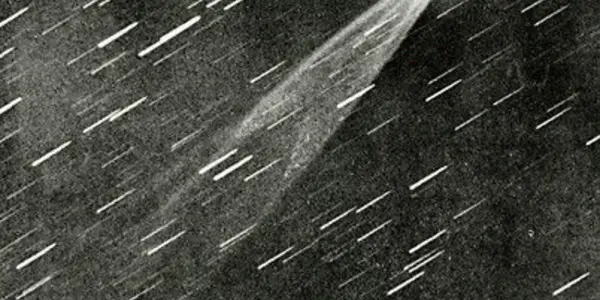
The Draconids (also called Giacobinids) are a meteor shower associated to comet Giacobini-Zinner (see below for a 100-year-old picture of the comet). While most years this shower passes unnoticed to all but few professionals and experts amateurs, yielding only very few meteors in the nights between October 6th and 10th, every once in a while the Draconids do put up a real show, producing hundreds, or even thousands of meteor streaks per hour in clear skies.

One of the issues that emerged in the discussion of whether researchers should be bloggers is the fact that it is always dangerous to wear multiple "hats", i.e. carrying multiple responsibilities which may sometimes come in conflict with one another.Wearing two hatsOf course this is a very common and old problem. I am indebted to Jim S.M., who sent me a few excerpts from Churchill's autobiography, which are very relevant to the issue besides being quite amusing:

Tomorrow I will fly to Frascati, where are the headquarters of INFN, the italian institute for nuclear physics. I will attend to an event there, called "Incontri di Fisica" (Physics meetings), where high-school teachers meet researchers and receive training, as well as discuss ways to improve science education and popularization in schools and outside.I will be discussing the subject of "Science popularization with blogs" on Wednesday afternoon and then, two days later, I will be the last speaker with another short talk, where I will try to summarize some ideas on the matter. And you might help for this latter presentation.
I'm nostalgic tonight. The reason ? The Tevatron has finally stopped running, for good.It's strange to find out one can mourn the shutdown of a synchrotron just as the passing away of an old friend, but that's more or less how I feel like tonight. And I am not even among the ones who can claim to have been around for the full duration of the machine's lifetime, like Giorgio Chiarelli - as Giorgio recounted here, he was there in the CDF control room when the first proton-antiproton beams collided the first time, in 1985.
Tomorrow is the last day on duty. For twenty-six years the Tevatron collider, the four-mile-long accelerator of the Fermi laboratory in Batavia (IL), has provided the CDF and DZERO experiments with proton-antiproton collisions at 1.8 and then 1.96 Tera-electron-Volts, allowing the investigation of fundamental physics at the highest available energy.I received today a very nice video which commemorates the Tevatron collider. The video was produced by a colleague, Rob Snihur, together with an artist friend of his, Maria Scileppi. I hope you like it! A text is also available on Maria's site.
The organizers of TEDx Flanders did produce in a very timely manner very professional videos of the event, so you can follow offline the talks, including mine. However, what I said is not exactly what I had planned to say. Further, you might not want to spend your time looking at a recording. So for the record, I am pasting here my unamended script. Later on I will also post here the slides I showed while talking, which cannot be seen in the video.----------------------------------------------------------- Thousands of physicists, engineers, computer scientists, modern-age seers have worked at it for the last twenty years.
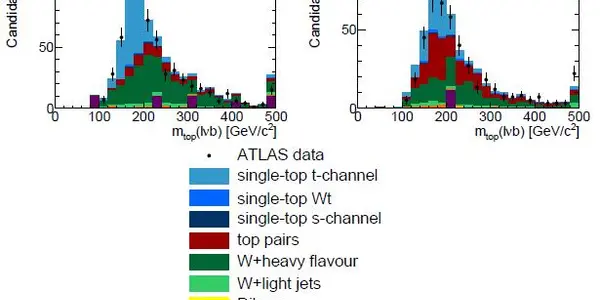
A well-known HEP rule says that yesterday's searched new processes will be tomorrow's annoying irreducible backgrounds; but since I am an optimist, I always see the glass half-full and feel compelled to add that today they are pleasing high-statistics signals. Take single top quark production: the Tevatron experimentalists (you can include me in the lot) banged their head for a decade trying to measure it; they finally succeeded, but the signal always remained a small excess of events in the tail of a highly-refined multi-variable discriminator.