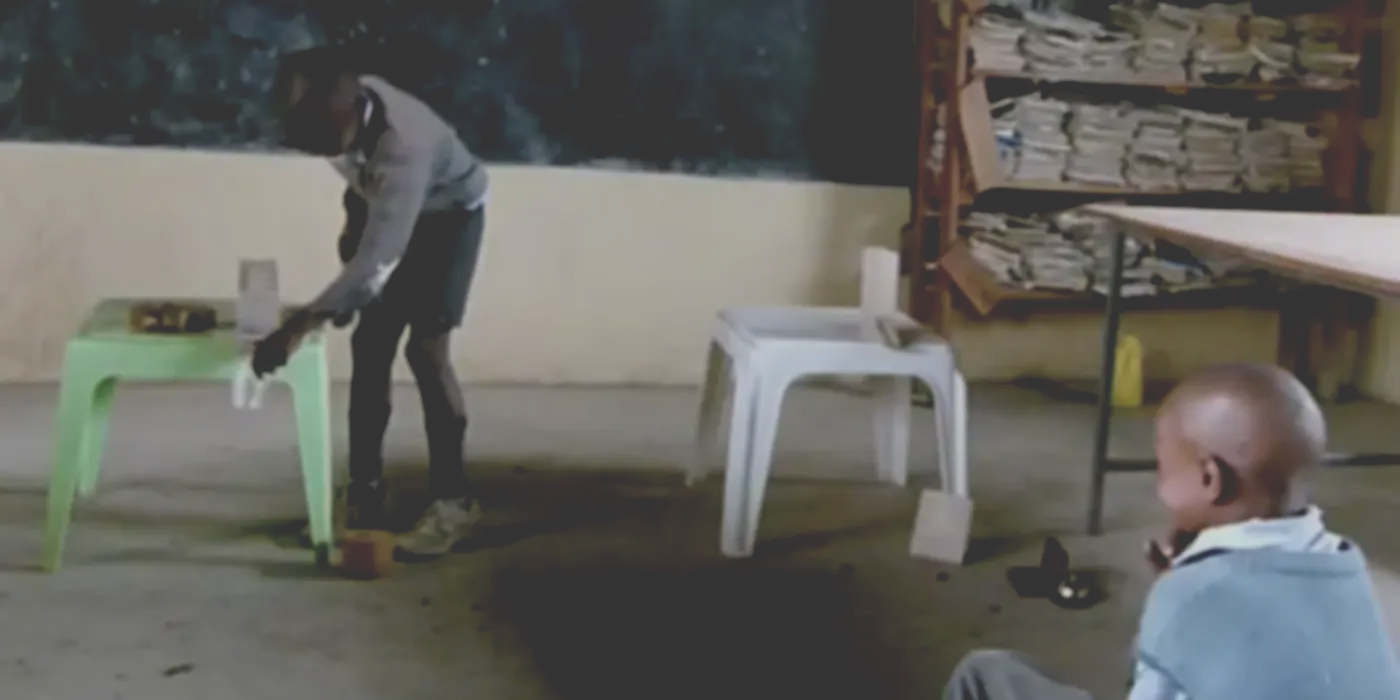
Kids Helping Kids Is Universal - But Cultures Help Differently
A simple game reveals a universal instinct in kids
A simple game reveals a universal instinct in kids


Discovery of a new protein that controls the presence of the Vel blood group antigen on our red blood cells will make it possible to use simple DNA testing to find blood donors for patients who lack the Vel antigen and need a blood transfusion, say researchers.
The world produces a lot of food, enough to feed billions more than are living right now. There is a distribution issue, which will be solved as science engineers more crops that can grow in more local conditions, but one way to make more food available right now will also save people money - reducing food waste.
4 out of every 10 pounds produced in the United States alone goes to waste, claimed John Floros, Ph.D., dean of the College of Agriculture at Kansas State University, in a keynote talk at the American Chemical Society meeting.
New research hopes to create reactions necessary for industries such as pharmaceutical companies but eliminate the resulting waste from traditional methods.
Traditional methods – dating back thousands of years – involve using solutions to speed up chemical reactions that are used to make products that we use every day. However, the leftover waste or solvents can often be a volatile compound.
Disposal and recycling is also becoming a growing and more costly challenge for companies as they follow increasing federal environmental regulations.

Researchers have designed a new kind of adaptive material with tunable transparency and wettability features - imagine a tent that blocks light on a dry and sunny day, and becomes transparent and water-repellent on a dim, rainy day. Or highly precise, self-adjusting contact lenses that also clean themselves.
The new material was inspired by natural dynamic, self-restoring systems, such as the liquid film that coats your eyes - tears. Individual tears join up to form a dynamic liquid film with an obviously significant optical function that maintains clarity, while keeping the eye moist, protecting it against dust and bacteria, and helping to transport away any wastes – doing all of this and more in literally the blink of an eye.
Animal and dairy scientists presenting at the Lactation Biology Symposium in Phoenix, Arizona have discovered that drinking milk at an early age can help mammals throughout their lives. The presentations focused on epigenetics, or how gene expression changes based on factors like environment or diet. Epigenetic changes modify when or how certain traits are expressed.
But understanding exactly how milk affects the body is a complicated story of hormones, antibodies and proteins, as well as other cells and compounds researchers have not yet identified.
Health plans that offer low premiums and high deductibles believe that patients with deductibles of $1,000 or more for individual coverage (or twice that for family coverage) will shop around for the best price to get their health care.
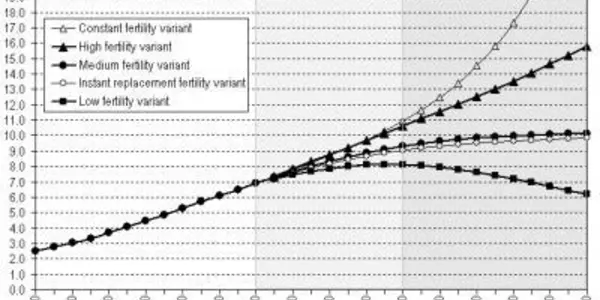
A model based on global population data spanning the years from 1900 to 2010 has caused a research team to predict the opposite of what Doomsday Prophets of the 1960s and beyond insisted would happen - the number of people on Earth will stabilize around the middle of the century and perhaps even start to decline.
The results coincide with the United Nation's downward estimates, which claim that by 2100 Earth's population will be 6.2 billion, if low fertility and birth rate continues on its current path, below the 7 billion we are at now.
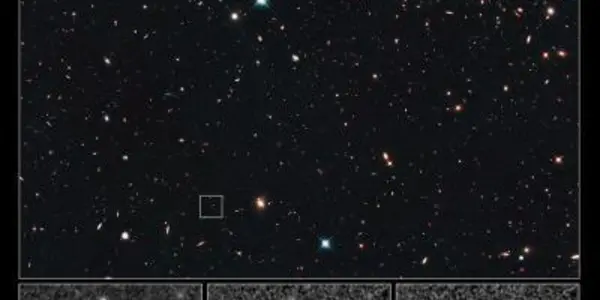
NASA's Hubble Space Telescope has found the farthest supernova so far. Supernova UDS10Wil, nicknamed SN Wilson after American President Woodrow Wilson, exploded more than 10 billion years ago.
SN UDS10Wil is a Type Ia supernovae. These beacons can be used as a yardstick for measuring cosmic distances. One of the debates surrounding Type Ia supernovae is the nature of the fuse that ignites them. This latest discovery adds credence to one of two competing theories of how they explode. Although preliminary, the evidence so far favors the explosive merger of two burned out stars; small, dim, and dense stars known as white dwarfs, the final state for stars like our Sun.
If objects from space kindled life on Earth, how did it happen?
The terrestrial or extra-terrestrial case for important ingredients that led to the building blocks of life is a hot debate. A new paper says that adenosine triphosphate, similar to what is now found in all living cells and vital for generating the energy that makes something alive, could have been created when meteorites containing phosphorus minerals landed in hot, acidic pools of liquids around volcanoes, which were likely to have been common across the early Earth.
Building on work done by Dominic ffytche et al in 2000, which delineates more than a dozen types of hallucinations, particularly in relation to people with Charles Bonnet syndrome (a condition that causes patients with visual loss to have complex visual hallucinations), a new paper in Brain outlines case studies of hallucinations of musical notation, and commented on the neural basis of such hallucinations.
While ffytche believes that hallucinations of musical notation are rarer than some other types of visual hallucination, Professor Oliver Sacks M.D. details eight examples of people who have reported experiencing hallucinations of musical notation, including:
Bodily fluids contain lots of information about the health of people, that is why medical doctors routinely have blood and urine analyzed.
But bodily fluids can do more than mark infectious diseases or cancer and organ failure, researchers at ETH Zurich and at the University Hospital Zurich have shown they can take advantage of modern high-resolution analytical methods to provide real-time information on the chemical composition of exhaled breath.
Yes, your breath has an identifiable individual chemical pattern. Call it a a 'breathprint'?
The first published results from the Alpha Magnetic Spectrometer (AMS) physics experiment on the International Space Station were announced today and though the result is the most precise measurement to date of the ratio of positrons to electrons in cosmic rays, we still have not caught our first glimpse into dark matter.
The AMS experiment, constructed at universities around the world and assembled at the European Organization for Nuclear Research (CERN), is the world's most precise detector of cosmic rays. It was installed on the Space Station May 19th, 2011 after having been brought into orbit on the last flight of NASA's space shuttle Endeavour. To date it has measured over 30 billion cosmic ray events.