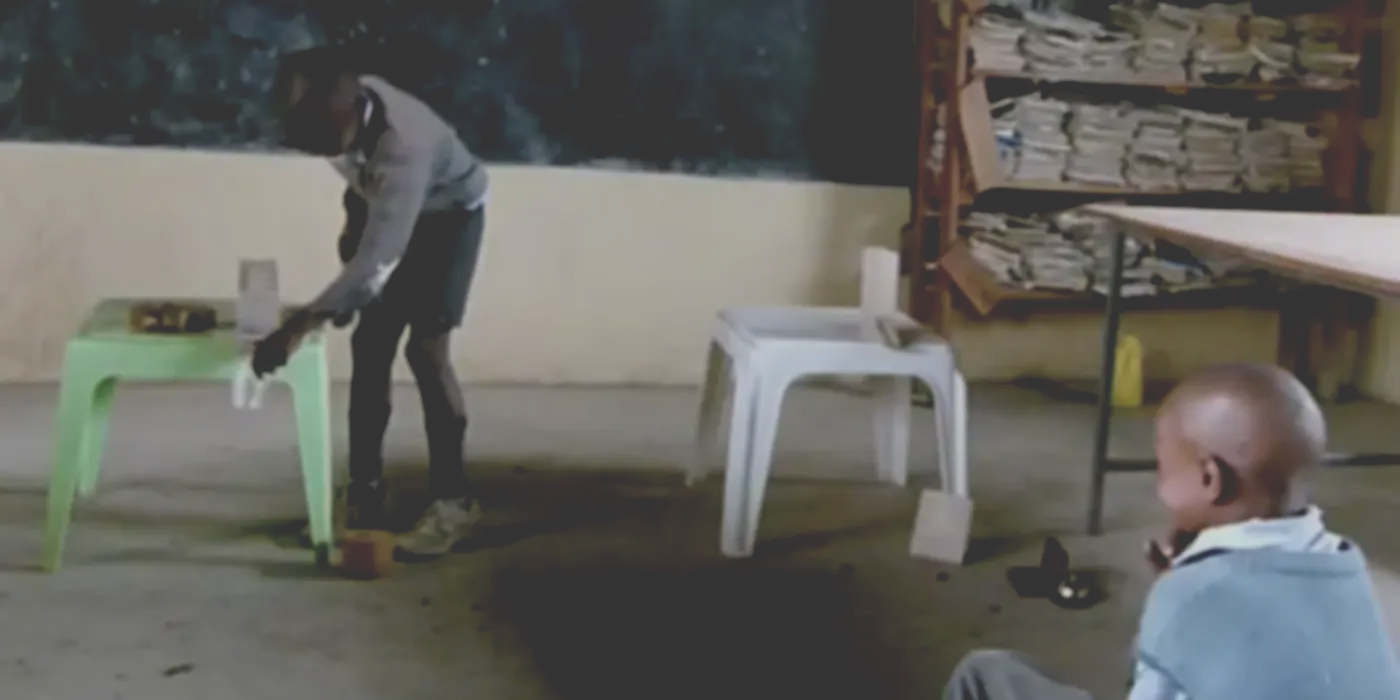
Kids Helping Kids Is Universal - But Cultures Help Differently
A simple game reveals a universal instinct in kids
A simple game reveals a universal instinct in kids


The elusive 113th atomic element has been confirmed by researchers at the RIKEN Nishina Center for Accelerator-based Science (RNC). A chain of six consecutive alpha decays, produced in experiments at the RIKEN Radioisotope Beam Factory (RIBF), conclusively identifies the element through connections to well-known daughter nuclides.
That sets the stage for Japan to claim naming rights for the element, the first Asian country to name an atomic element.
According to a new market report published by Transparency Market Research, "Global Diabetes Devices Market and Diabetes Drugs Market - Industry Scenario, Trends, Analysis, Size, Share and Forecast, 2011 - 2018," the global diabetes devices and drugs market was worth USD 50.8 billion in 2011 and is expected to reach USD 98.4 billion in 2018, growing at a CAGR of 9.9% from 2011 to 2018.
In the overall global market, North America accounted for the highest share worth USD 19.9 billion in 2011 followed by Europe. However, with the continuous population and economic growth of the Asia-Pacific region, especially India and China, it is expected to witness the highest growth rate in the next six years.
BOTOX(R) has been licensed by the Medicines and Healthcare Products Regulatory Agency (MHRA) for the management of urinary incontinence in adult patients with neurogenic detrusor overactivity (NDO) due to subcervical spinal cord injury (SCI) (traumatic or non-traumatic) or multiple sclerosis (MS), who are not adequately managed with anticholinergics.
In 2008, China needed to improve the air around Beijing before the Olympics, so they did something that was considered Draconian - they banned cars for everyone except the rich and the government.

While organic farmers like to claim the boom in agriculture of the last 30 years was not related to science, history says otherwise.
Entertainer Andy Williams died this week following his year-long battle with bladder cancer. Over 10,000 people are diagnosed with bladder cancer every year in the UK but recent research from Action Bladder Cancer showed that one quarter (25%) of UK men and women wouldn't know what a sign of possible bladder cancer might be.
In one of the most comprehensive global surveys of corporate board directors to date, men and women directors were found to be in striking alignment on economic outlook, political and regulatory concerns, and the business challenges facing their companies - but differ sharply when it comes to board diversity.
Released today, the 2012 Board of Directors Survey - conducted by Women Corporate Directors (WCD), Heidrick&Struggles, Professor Boris Groysberg of the Harvard Business School, and researcher Deborah Bell - details the governance practices, strategic priorities, and views on their own boards' strengths and weaknesses of more than 1,000 directors from around the world.
An Internet freedom advocacy group has rated 14 countries as "free" in a new report, with Estonia, USA and Germany leading in online freedom for citizens, while countries such as Cuba, China and Iran have the least freedom.
The global survey 'Freedom on the Net 2012', was released this week.
The analysis covers 47 countries in six geographical regions, and was conducted by Washington-based Freedom House between January 2011 and May 2012.
Elsevier has announced the launch of NeuroImage: Clinical as an open access journal.
NeuroImage: Clinical will communicate advances in the study of abnormal structure-function relationships of the human nervous system based on imaging. It offers authors the choice of two Creative Commons licenses, either Creative Commons By Attribution or Creative Commons by Attribution-NonCommercial-ShareAlike.
Europe isn't in this Millennium on science but they are beginning to embrace the Internet. The availability and popularity of online education in Europe is on the rise. Following the revolutionary developments in online learning in the US, Europe is now catching up, increasing both funding and infrastructure.
In the last decade, the US has heavily invested in online education: it is projected that US online education will outgrow traditional education by 2015. Institutions like Stanford and MIT offer massive online courses for free, followed by up to 100,000 students worldwide. Europe now heads in the same direction. Within its upcoming 'Erasmus For All' program the European Commission makes more funding available to support distance education in Europe.
Oh, for those days of 2007, when the miracle vegetable story of the week - maybe the year - was instead about the super powers of chocolate.The science underpinning those claims was sparse but the usually-reputable AAAS even had an entire panel on it at its annual meeting, populated by only one researcher who was not funded by the Mars chocolate empire.
The more conservative a female House of Representatives lawmaker is, the more likely she is to look like a woman, according to a UCLA analysis.Heteronormative gender bias, right? Stupid GOP likes 1950s stereotypes.Maybe. The GOP wears ties too, and it's hard to know if President Obama even owns one. The UCLA psychologists were somewhat sure they could tell a book by its cover, and so they did. They also found the opposite to be true: Female politicians with less feminine facial features were more likely to be Democrats, and the more liberal their voting record, the more mannish they looked.